Corrugated board grades explained: flutes, single and double wall, paper weights
What a board grade describes, how flute and wall options compare, how liner and fluting papers are specified, and how to choose without over-specifying.
By Tradepack ·
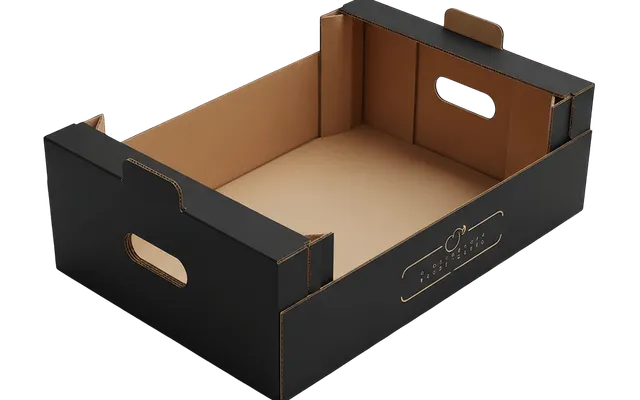
When a box fails, the style is rarely the problem. A 0201 case that crushes on the pallet or a mailer that punctures in the courier network is usually the right construction in the wrong board. The board grade is the part of a specification most buyers skip, and it is the part that decides both how the box performs and what it costs.
A grade describes three things: the flute, the wall construction, and the papers the board is made from. Here is what each means and how to choose between them.
What corrugated board is made of
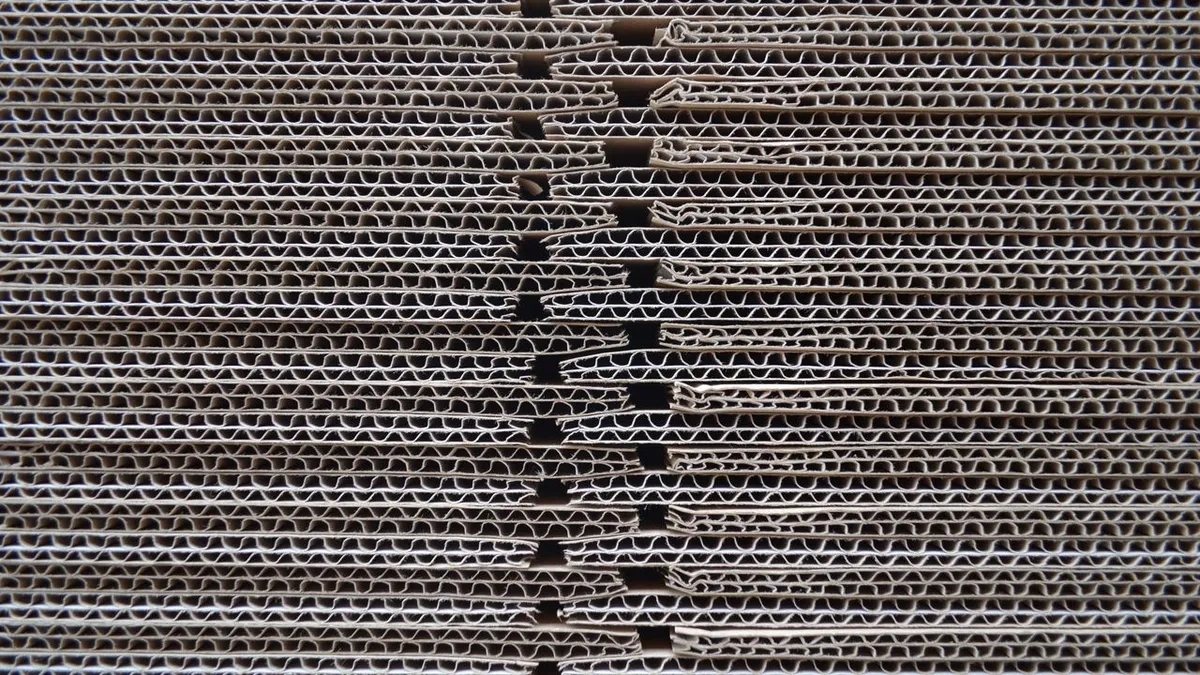
Corrugated board is a sandwich. Flat sheets of paper called liners form the faces. Between them sits the fluting, a paper formed into a continuous wave and glued to the liners at the tip of each wave. Those arches are what make the board stiff and cushioning for its weight: they resist crushing in the same way an arch carries load.
Flutes
The flute is the size of the wave. Smaller flutes pack more waves into each metre of board, giving a thinner, flatter sheet. Larger flutes give a thicker sheet with more cushioning and more stacking strength for the same paper weight.
| Flute | Approximate thickness | Typical use |
|---|---|---|
| F and other micro flutes | Around 1 mm or less | Small retail cartons and presentation packs |
| E | About 1.5 mm | Mailers, book wraps, printed retail packs |
| B | About 3 mm | General transit cases and heavier mailers |
| C | About 4 mm | Transit cases needing more cushioning and stacking strength |
Exact thickness varies with the papers used and between manufacturers, so treat these as working figures. They matter when converting between internal and external box sizes, which our guide to measuring a box covers in detail. A flute, the largest standard profile, exists but is less commonly specified.
As a rule of thumb, choose finer flutes where print quality and a slim profile matter, and larger flutes where the box has to protect heavier contents or carry weight in a stack.
Single, double and triple wall
Single wall board has one fluted layer between two liners. It covers the majority of e-commerce and transit packaging, from E flute mailers to B and C flute cases.
Double wall board has two fluted layers with a middle liner between them. The common combinations are BC, at around 7 mm, and EB, at around 4.5 mm. Double wall is the choice for dense or heavy contents, high stacks, long periods in storage, and packs that are reused, such as removal boxes. EB is useful when a box needs more strength than single wall but still wants the smoother E flute face on the outside for print.
Triple wall adds a third fluted layer and is used for heavy industrial and bulk packaging. It sits outside what most distributor ranges and e-commerce operations need.
Liners and fluting papers
The papers matter as much as the flute. Each layer is specified by its type and its weight in grams per square metre.
Liner types
- Kraft liner contains a higher proportion of virgin fibre. It is stronger for its weight, holds its strength better in damp conditions, and gives a good print surface. It typically costs more.
- Test liner is made from recycled fibre. It is the common, cost-effective choice for general transit packaging.
- White and mottled liners give a white or mottled white face where the outside of the box needs to present print or a cleaner look.
Fluting types
Semi-chemical fluting is stiffer and gives better compression strength for its weight. Recycled fluting costs less and suits a wide range of general applications.
Liners are commonly specified somewhere in the region of 115 to 300 grams per square metre, with heavier liners giving more strength and more resistance to puncture.
Reading a grade
A board might be written as something like 150K / 112F / 150T. Read left to right, that describes a 150 g/m² kraft outer liner, a 112 g/m² fluting, and a 150 g/m² test inner liner. The example is illustrative, and the shorthand differs between mills and manufacturers, so if a quote gives a grade in code, ask for each layer to be written out in full.
Where a customer needs board with a particular recycled content or from particular sources, that can be specified alongside the grade.
Flute direction
In a box wall, the flutes normally run vertically. Standing upright, each flute acts as a small column and carries the weight of the boxes stacked above. If the flutes run horizontally instead, stacking strength drops sharply. Flute direction is set when the blank is designed, and it is one of the things a cut sample confirms before production.
Choosing a grade
Start from the product and its journey, not from a grade code.
- Weight of the contents. Heavier and denser loads need stronger board, a larger flute, or double wall.
- Stacking and storage. How high will the boxes be stacked, and for how long? Board loses strength under sustained load over time.
- Conditions. Damp warehouses and cold stores weaken corrugated board. Kraft liners hold up better where moisture is a factor.
- Transit. Parcel networks subject boxes to drops, conveyors and mixed loads. Palletised freight is gentler on individual cases but heavier on stacking.
- Print. Finer flutes and smoother liners give the best result where branding matters.
- Closure and format. Mailers, wraps and die-cut styles often favour E or B flute for folding and creasing performance.
Edge crush and box compression tests put numbers on board and box strength, and they are the objective way to compare one grade with another.
The cost of getting it wrong
Under-specifying is visible: crushed cases, split corners and damaged goods. Over-specifying is quieter and more common. Heavier board costs more per box, adds freight weight on every pallet, and often delivers strength the application never uses. On a repeat programme, stepping down a paper weight or moving from double to single wall where the load allows can take real cost out without any loss of performance.
How we approach it
Tradepack’s CAD design team recommends a board grade from the product, the load and the route it takes, rather than defaulting to a heavy board to be safe. In practice, E and B flute single wall covers most of the mailers and book wraps we make, while removal boxes and dense loads move to BC double wall. New formats are cut as a sample for testing before any production run, so the grade is proven with the real product.
If you know the grade you need, include it in your quote request. If you do not, describe what goes in the box, how heavy it is, and how it ships, and we will recommend one.