Pricing packaging for resale: where the margin actually is
Why plain boxes are hard to make money on, where a packaging reseller's margin really comes from, and the hidden costs that quietly erode it.
By Tradepack ·

Packaging resellers tend to know their unit costs to the penny and their margin by instinct. The two are not the same thing, and the gap between them is where most of the money goes.
This is a look at where margin actually comes from when you sell corrugated, and at the costs that remove it without ever appearing on a quote.
The commodity trap
Start with the uncomfortable part. A plain brown 0201 in a standard size is the same product from every supplier in the country. The customer knows it, can check it in a minute, and will.
That makes plain stock boxes a price comparison, and price comparisons end at the lowest number anyone is prepared to quote. Carrying them is still worth doing: they open accounts, they fill orders and they keep customers from going elsewhere for the basics. But they are the door, not the house. A range that depends on them for its margin is a range that is always one competitor’s price list away from losing it.
Where the margin actually is
Margin lives in the things a competitor cannot put on a like-for-like price list.
Fit. A box cut to the customer’s product rather than to the nearest stock size uses less board, fills less space in a van and needs less void fill. The customer is paying for the fit, and the saving shows up in their freight. Our piece on what drives the unit price explains where the cost sits.
Print. Branded packaging is priced as part of the customer’s brand rather than against a plain box. Two colours of flexographic print covers most of what trade packaging needs.
Closure. A peel and seal strip takes the tape gun off the customer’s packing bench. Priced against the labour it removes, rather than against the box, it carries margin comfortably.
Availability. A customer whose packaging runs on a programme, with stock held for them and delivered on a schedule, is buying certainty. That is worth more than a lower unit price on a box that might not be there.
Price the packing line, not the box
The single most useful shift in a pricing conversation is to stop quoting per box and start quoting per outcome.
A customer packing a thousand orders a day does not care about a penny on the box. They care about the hour a day their packers spend with a tape gun, the parcels that go out a size too big and pay for it at the courier, and the morning they ran out. Every one of those has a cost they can count, and a packaging specification that removes it is priced against that cost rather than against a competitor. The 3PL piece works through the arithmetic.
The costs that erode margin quietly
These never appear on a supplier’s quote, and they routinely take more margin than the price negotiation ever wins back.
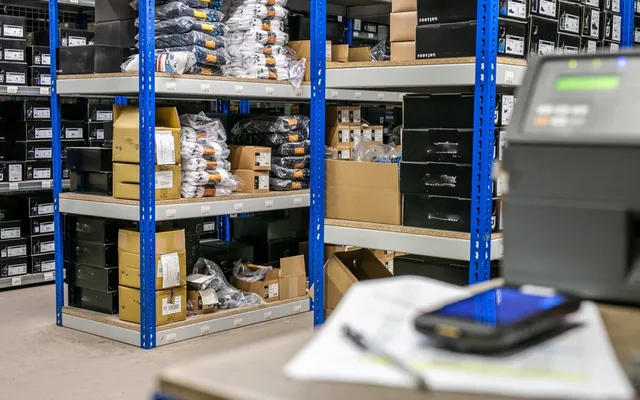
- Holding stock. Racking, space, capital and the write-off when a specification changes before the pallet clears.
- Small reactive orders. Short runs, part pallets and expedited freight, almost always caused by not knowing what the customer needed next month.
- The second freight leg. Goods delivered to your warehouse and then delivered again to the customer, when they could have gone direct.
- Rework and returns. A wrong box, a colour that has drifted or a pallet the customer’s warehouse rejects. One of these can wipe out the margin on a year of orders for that line.
- Payment terms. Paying a supplier in thirty days and being paid in sixty finances your customer’s stock with your money.
Structure, not just price
Three structural decisions protect margin better than any negotiation.
Put customer-specific formats on a programme. A locked specification, an agreed volume and scheduled call-offs remove reactive ordering, and a repeat programme makes the price predictable for both sides.
Drop-ship what you do not need to touch. Customer-specific stock can go straight from the manufacturer to the customer’s site in your name, which takes out the holding cost and the second freight leg at once.
Keep the stock range lean. Hold the fast, broad lines that serve many customers, and quote the rest. Our guide to stocking a range covers how to decide.
Where a manufacturer fits
We manufacture trade only, which means we are not competing with you for your customer. Formats are made to your specification, delivered to your warehouse or direct to your customer’s site in your name, and run as programmes where the volume justifies it. The point is to make the margin-carrying parts of your range easy to sell: the fitted formats, the print, the closures and the guaranteed availability.
Tell us which lines carry your margin and which do not and we will look at where manufacturing can move them.