0427 mailer boxes: sizing to carrier bands and getting the closure right
How carrier size bands drive the cost of an e-commerce mailer, why board thickness matters when designing to a band, and the closure options on a 0427.
By Tradepack ·
On an e-commerce packing line, the box specification and the postage bill are the same conversation. Carriers price parcels in bands, and a few millimetres either side of a band boundary changes what every single parcel costs to send. Get the mailer right and the saving repeats on every order, for years.
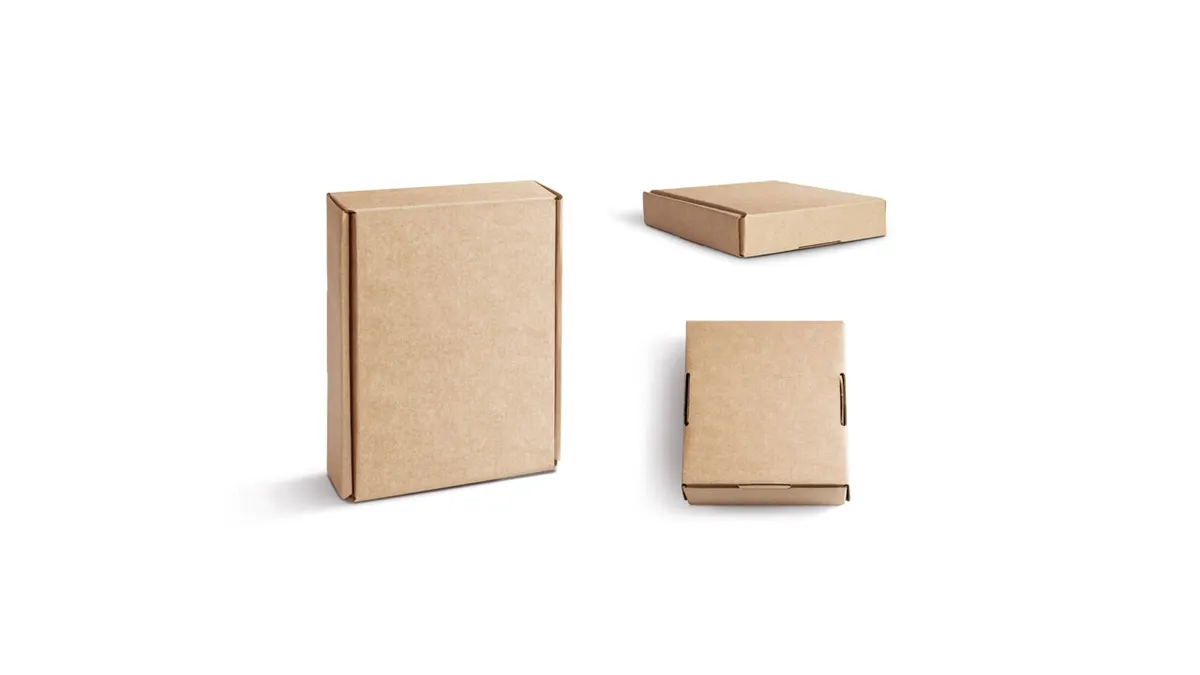
The FEFCO 0427 is the format most of those parcels go out in: a one-piece die-cut blank that folds into a box with a hinged lid, a tuck-front closure and dust flaps, needing no tape to erect.
Bands drive the cost, not the box
Carriers group parcels into size and weight bands with names like Letter, Large Letter and Small Parcel, each with its own price. The cheaper bands have tight limits, and for flat-ish items it is almost always the thickness that decides which band you land in, not the length or width.
Two things follow from that.
First, the numbers that matter are external, including the board. A mailer designed to an internal depth sits deeper once you add board top and bottom, plus the thickness of the lid where it overlaps. Our guide to measuring a box covers the internal and external distinction and how much each flute adds.
Second, check the current limits rather than relying on a figure someone quoted a few years ago. Carriers revise their bands and prices, and a specification that used to fit may not any more. Design to what the carrier publishes today, and leave a little headroom.
Designing a 0427 to a band
A practical sequence:
- Start with the product, at its widest points, including any retail packaging it already wears.
- Decide the protection it needs. Does it want a snug fit, a layer of void fill, or an insert? That decision sets the internal depth as much as the product does.
- Add clearance, but only what is needed. Three to five millimetres per dimension is usually enough for hand packing.
- Add the board. Work out the external size with the flute you intend to use.
- Compare with the band, and if you are close to a boundary, look for depth before anything else.
- Sample and test with the real product, packed the way your team packs it.
Where the millimetres go
- Flute choice. E flute is the usual choice for mailers: slim, clean to print on and strong enough for most contents. B flute adds protection for heavier products but adds depth on every face. Our board grades guide sets out the trade-off.
- Void fill. Paper and air pillows take up depth. An insert that holds the product may take less room than loose fill, and presents better.
- Over-clearance. A mailer sized generously “to be safe” is a mailer that may have moved up a band.
- The lid overlap. On a tuck-front mailer the lid and front panel overlap, so the closed depth is not just base plus board.
Getting the closure right
The 0427 closes with a tuck front and locking tabs, and for many operations that is enough. There are three reasons to go further.
Speed. A peel and seal strip applied during manufacture turns closing the box into peel, fold, press. Over thousands of parcels that is a meaningful saving, and it removes the tape gun from the bench.
Tamper evidence. A pressure-sensitive strip makes opening obvious: the board tears before the adhesive releases.
Returns. A second strip lets the customer reseal the same box and send it back, which is why clothing and footwear brands specify it as standard. See peel and seal packaging for the options.
A tear strip can be added alongside any of these so the customer opens the box without a knife.
Up to two colours of flexographic print is applied inline during manufacture, on the outside, the inside, or both. Printing the inside of the lid is a cheap way to improve the unboxing moment, because it is the first thing the customer sees. For full-colour artwork, digital print and litho-lamination are available through our print partners.
Before you order
For packs that have to go through the door rather than into a parcel band, see letterbox packaging.
Send the internal dimensions or the product itself, the carrier and band you are aiming at, the board you have in mind, and whether you want peel and seal. We will design the blank, confirm the external size against the band, and cut a sample so you can test it before committing. Request a quote to get started.