Packaging for e-commerce: design for the packing bench, not the sample table
How e-commerce packs earn their keep: seconds per pack at the bench, carrier size bands, damage rates and the void fill a right-sized box removes.
By Tradepack ·
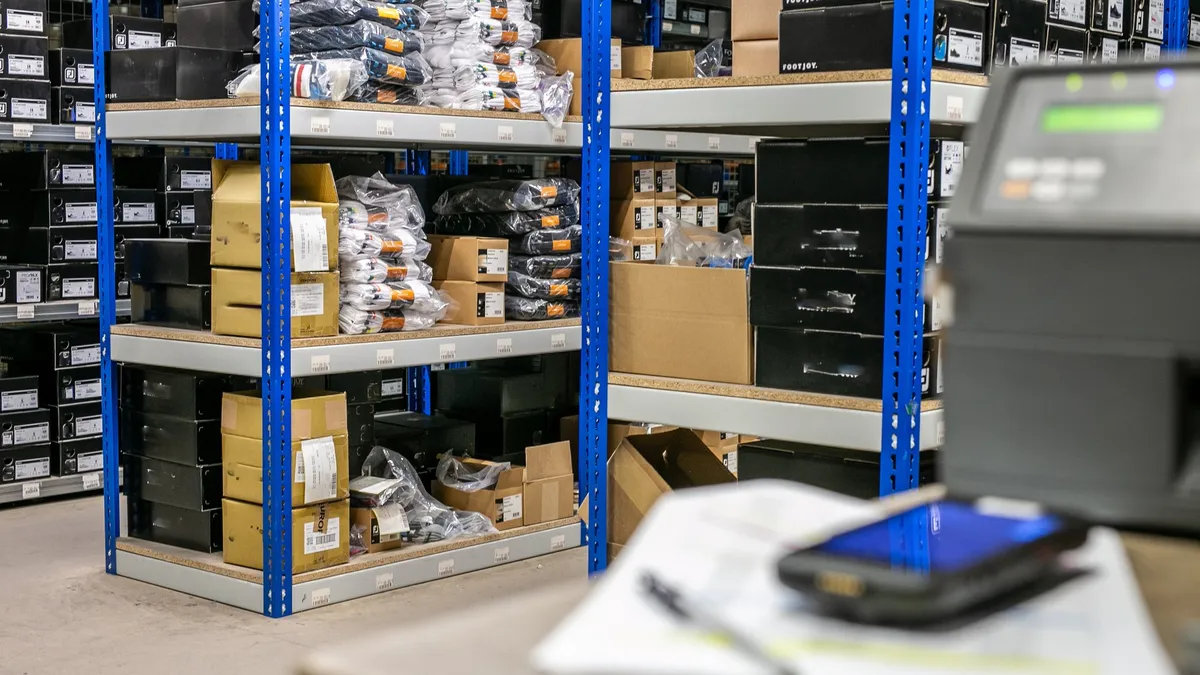
A pack is usually approved in a meeting. It is judged for the rest of its life on a packing bench, by someone with a queue of orders behind them and a carrier collection at four o’clock. The two settings reward completely different things, and most of the expensive mistakes in e-commerce packaging come from designing for the first and living with the second.
Here is what tends to matter once a pack is in daily use.
Seconds per pack are the whole argument
Labour is the largest controllable cost in most fulfilment operations, and it is spent in small amounts, thousands of times a day. Five seconds a pack sounds like nothing. Across 800 parcels a day it is a little over an hour of packing time, every day.
Things that reliably cost seconds: assembling a case from flat, hunting for the tape gun, cutting tape, adding void fill, and re-doing a pack that did not close cleanly. Things that reliably save them:
- Peel and seal closures, which take the tape gun out of the process entirely and seal in one motion.
- Crash-lock bases, which pop into shape rather than needing four flaps folded and taped.
- One-piece die-cut mailers, which fold up around the product with no glued joint and no separate lid.
None of these is automatically right. A crash-lock base costs more per unit than a plain 0201, and the labour saving only pays for that if the pack rate is high enough. That is an arithmetic question, and it is worth doing the arithmetic rather than arguing it.
Size bands decide the postage, not the scales
Carriers price on size bands and volumetric weight as well as actual weight. A pack that is a few millimetres over a threshold moves a whole product line into a more expensive band, and no amount of negotiating on board price will recover that.
This is the one dimension worth designing to first. Fix the band you want to sit in, then design the pack to fit inside it with the product in place, not empty and flat on a table. Our guide to sizing mailers to carrier bands covers how the thresholds interact with board thickness and closure, which is where most packs lose a band they were meant to hit, and letterbox packaging covers the shallow formats designed to stay in the cheapest band of all.
Right-size the box and most void fill disappears
Void fill is paid for three times: in the material, in the seconds it takes to add, and in the volume it adds to the parcel. It exists to stop the product moving inside a box that is bigger than it needs to be.
A right-sized pack removes most of that. Where a product genuinely needs to be held clear of the walls, such as glass or electronics, a die-cut insert does it more reliably than loose fill, presents better on opening and goes into the same recycling stream as the box. See how to measure a box for getting internal dimensions right the first time, including what board thickness adds.
Where damage actually comes from
Damage in parcel networks is rarely a board strength problem. It is usually one of three things: the product moving inside the pack, the pack being dropped on a corner, or the pack being crushed under a stack in a cage or trailer.
That points at design, not at heavier board. Hold the product still, keep it away from the corners, and choose a grade for the stacking load rather than for how the sample feels in the hand. Over-boarding costs money on every unit and often does not address the cause of the damage. Our board grades guide sets out the flute and wall choices behind that decision.
Returns are part of the pack
If the category has a meaningful return rate, the pack is doing two jobs. A second peel and seal strip, or a tear strip that leaves a clean closing edge, lets the customer return the item in the box it arrived in without buying anything extra or finding tape. It costs a little on the blank and it saves a return being refused because the item came back loose in a carrier bag.
Print that earns its place
Print on an e-commerce pack does three useful jobs: it identifies the brand on the doorstep, it tells the packer which SKU the box is for, and it makes opening feel deliberate. All three can be done with one or two colours on kraft.
We print up to two colours inline on our own line, Pantone matched, which covers brand marks, handling instructions and SKU identification for most trade packaging. Full-colour digital, four-colour flexo and litho-lamination are available through our print partners where a pack genuinely needs photographic imagery. Our guide to flexo, digital and litho print covers which is worth it at which run length.
Rationalise the range before you optimise it
Most operations carry more pack sizes than their order profile needs, and each extra size costs storage, tying up working capital and adding a decision at the bench. Pull a few months of dispatch data, plot the orders by the volume actually shipped, and the clusters are usually obvious.
Two things help cover the spread without adding lines. A multi-depth book wrap has several crease positions, so one blank covers a range of product heights and folds down to the contents. And a small number of well-chosen mailer sizes will usually beat a long tail of near-identical boxes that packers have to choose between under time pressure.
What to give a manufacturer
The fastest way to get a pack that works on the bench is to describe the bench. Alongside the product dimensions and weight, tell us the daily pack rate, the carrier and service, whether packing is single-item or multi-item, the return rate, and what is going wrong with the current pack. Our briefing guide lists the specification points that make a quote accurate first time.
We design the format in-house on CAD, cut samples on the digital flatbed so you can pack real product into a real pack before any tooling is ordered, then manufacture in pallet quantities with print, cutting, gluing and peel and seal application on a single pass. If you would like a format reviewed against the numbers above, send us the details.