Bespoke cardboard boxes: what actually drives the unit price
What moves the price of a bespoke corrugated box: blank area, board grade, run length, tooling, print colours and how efficiently the pack ships and stores.
By Tradepack ·
“What does a bespoke box cost?” is a fair question with an unsatisfying answer, because the price of a corrugated box is not one number. It is the sum of a handful of decisions, most of which are made before anyone asks for a quote. Knowing which decisions move the price, and by how much, is the difference between a specification that is expensive by accident and one that is expensive on purpose.
These are the drivers, roughly in order of how much they usually matter.
1. The area of the blank
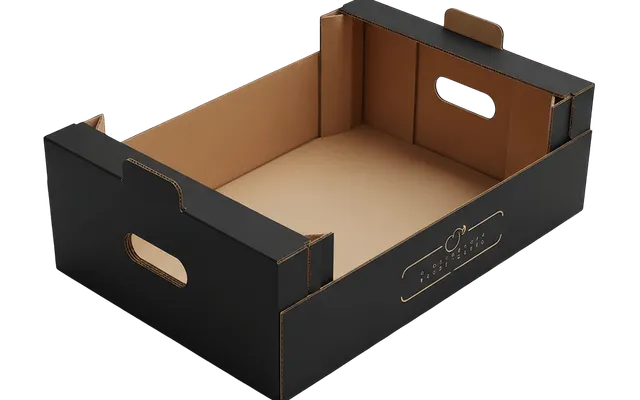
Board is the single largest cost in most corrugated packs, and it is bought by area. Everything that makes the flat blank larger makes the box dearer: bigger panels, deeper flaps, longer glue tabs, generous tolerances.
This is why right-sizing pays twice. A box designed to the product rather than to the nearest convenient size uses less board per unit and often removes the void fill needed to stop the product moving. It is also why a structural designer will argue about ten millimetres. Ten millimetres on every panel of a high-volume pack is a lot of board over a year.
How the blanks nest on the sheet matters too. A design that lays out efficiently, with several blanks cut from one sheet, converts more boxes from the same board than one that leaves waste around the edges. That is a design decision, not a purchasing one, and it is made on CAD before anything is quoted.
2. The grade of board
Flute profile, single or double wall, and the weights of the liner and fluting papers all move the price. Heavier and thicker costs more, which is straightforward. What is less obvious is how often packs are over-specified: double wall chosen because the product feels heavy, or a heavy liner chosen because a sample felt flimsy on a desk rather than under a stack.
Board should be chosen for the load the pack actually sees, which is usually compression in a stack rather than a single drop. Our board grades guide explains what a grade describes and where the sensible trade-offs sit. Moving down one grade on a high-volume line, when the testing supports it, is one of the largest savings available.
3. Run length
Every production run carries a set-up: the tooling is fitted, the print registered, colours matched, the first sheets run and checked. That time is the same whether the order is one pallet or twenty, so it is spread across the boxes produced.
Short runs therefore carry a large share of the set-up per box, and long runs carry very little. This is why the same specification can be quoted at noticeably different unit prices depending on quantity, and why annual volume is worth stating in an enquiry even when you want to call the stock off in stages. A trade supply programme quotes the run against the annual volume and schedules call-offs against it, so the price reflects the whole commitment rather than each individual order.
4. Tooling
A new die-cut format needs a cutting forme. It is a one-off cost that belongs to the design, not to the order, and it is held for repeat runs. The second order on the same specification carries no tooling charge.
Two things follow. First, tooling favours designs you intend to keep: a format that will run for years absorbs it easily, while a one-off promotional pack may not. Second, tooling is worth spending on the right design, which is why we cut samples on a digital flatbed and let customers pack real product into them before a forme is ordered. Changing a crease position on a sample is free. Changing it after tooling is not.
Where a job is genuinely short-run or seasonal, digital flatbed cutting avoids tooling altogether, at a higher unit price.
5. Print
Print costs sit in two places. Plates are a one-off per colour per design, held for repeats, so the first order on a new artwork carries them and later orders do not. Then there is the ink and the press time, which is where colour count and coverage matter.
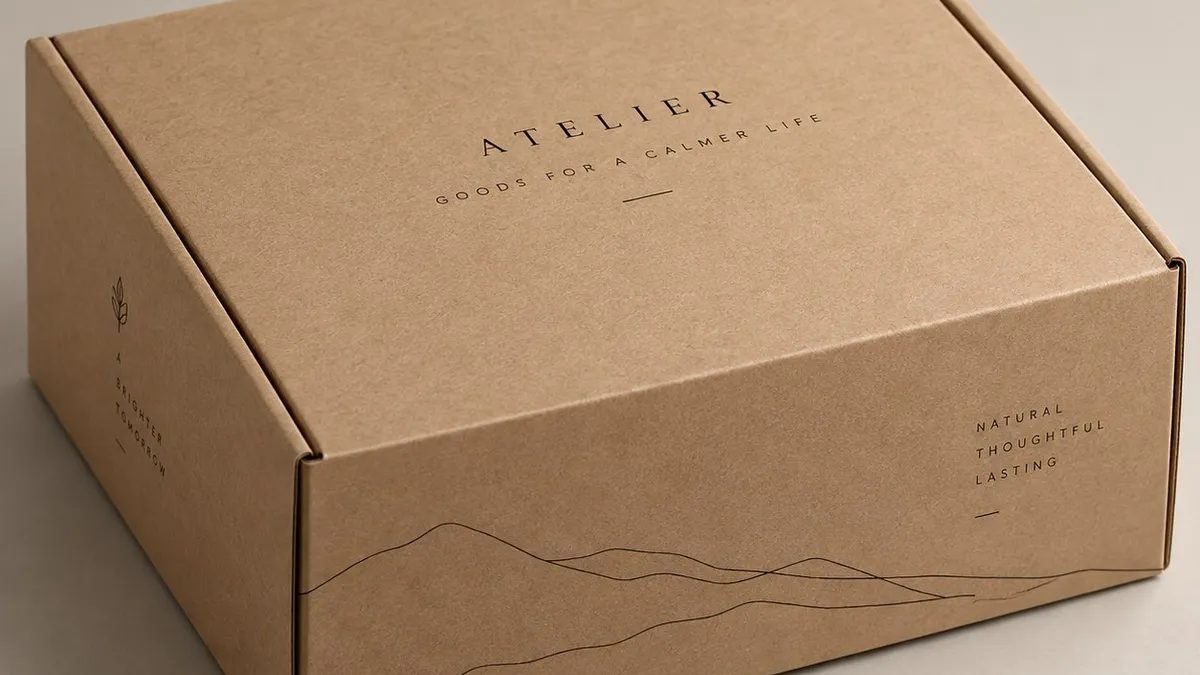
We print up to two colours inline, Pantone matched, on the same pass as cutting, creasing and gluing. Because there is no separate print process, no second handling and no extra lead time, inline two-colour print adds less to the unit price than buyers expect. Heavy solid coverage costs more than line work and type, and a solid flood across a large panel is the most expensive way to use two colours.
Full-colour digital, four-colour flexo and litho-lamination are available through our print partners for packs that genuinely need photographic imagery. They sit at a different price point, and our print methods guide covers where each is worth it.
6. Gluing, closures and finishing
A glued manufacturer’s joint, a multi-point glued base, a peel and seal strip or a tear strip each add material and a process. On our line these are applied inline rather than as separate operations, which keeps the cost of each modest, but they are not free and they should each be earning something: faster packing, a tape-free closure, a cleaner opening, an easier return.
7. How the pack ships and stores
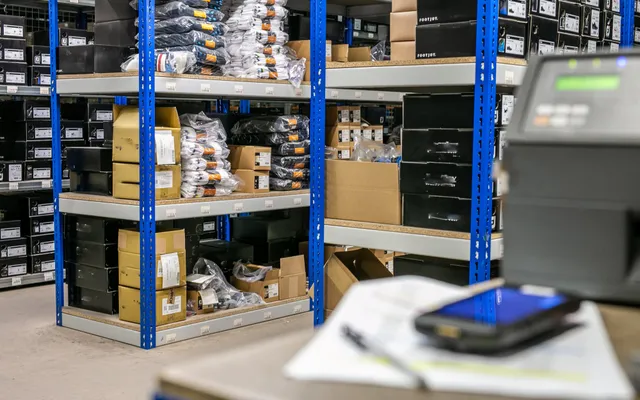
The last driver is one buyers often forget: a box is also freight. Flat blanks that stack densely on a pallet ship more efficiently than bulky pre-assembled formats, and a pack designed to fill a pallet layer with no wasted space moves more units per delivery. Pallet fill, pallet count and how the stock is stored all end up in the delivered cost per box even though none of them is a manufacturing cost.
What makes a quote accurate first time
The quickest route to a firm price is a complete specification: internal dimensions, product weight, what the pack has to survive, annual volume and call-off pattern, print colours and artwork status, and any carrier limit the pack has to sit inside. Our briefing guide sets it out in full.
If you have a current pack and a target price, send both. It is often possible to hold the performance and find the saving in blank area, grade or run length rather than in the quality of the box. Tell us what you are buying today and we will quote against it.