Custom advent calendar boxes: packaging for coffee, cosmetics and retail brands
How custom advent calendar boxes are built, from the outer box to the inner compartments, which products suit them, and how to choose between digital, flexo and litho-laminated print.
By Tradepack ·
A calendar turns a product range into a ritual. It is one of the few packaging formats people buy as much for the packaging as for what is inside, which is why coffee roasters, tea brands, cosmetics and skincare brands, and gift retailers use it to turn a sampling range into a premium seasonal product.
Off-the-shelf empty calendar boxes rarely fit a real product range well. A custom calendar is designed around your products from the start, so every compartment fits, the set travels safely, and the artwork carries your brand rather than a generic template. If your product can be opened one day at a time, a calendar can be designed around it.
How a calendar box is built
Every calendar has two parts: an outer box that holds and presents the set, and inner compartments that hold each day’s product.
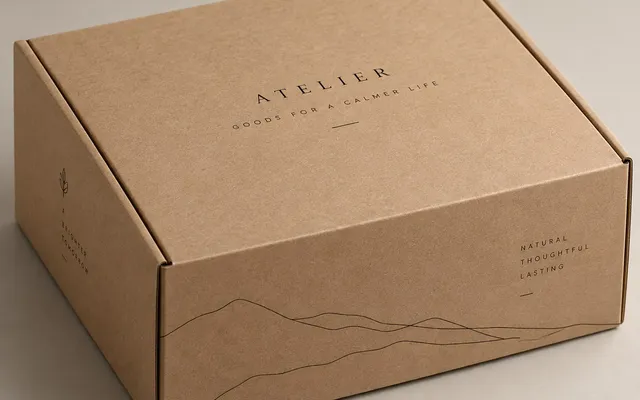
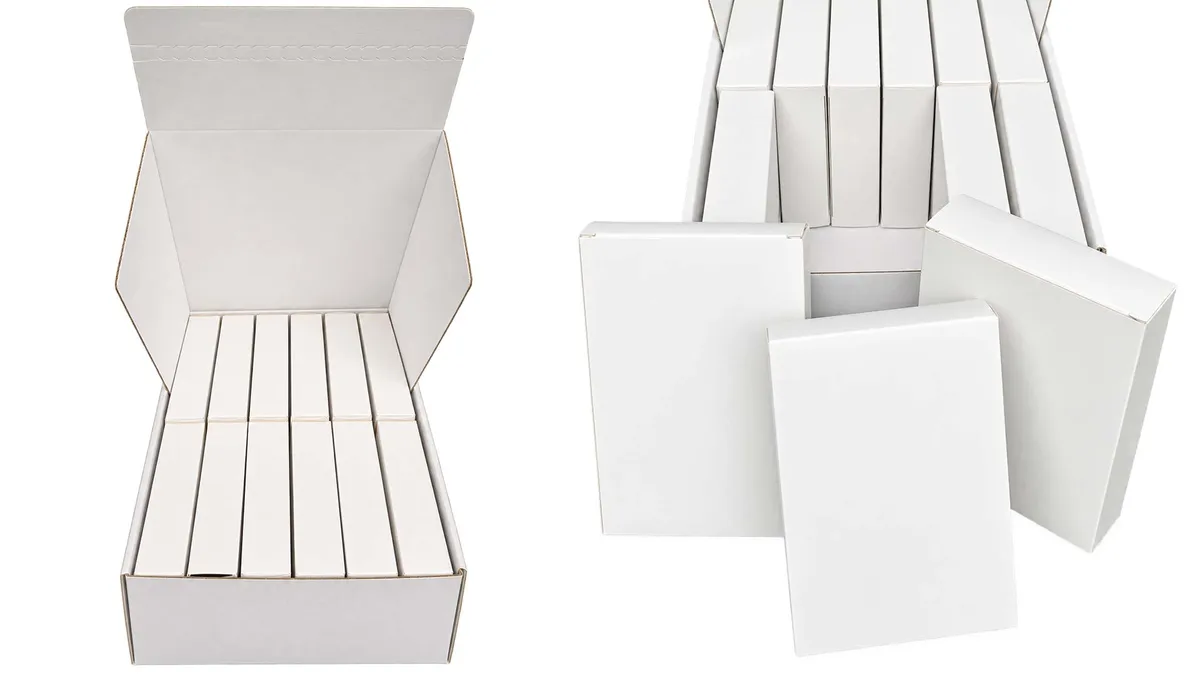
The outer box carries the main artwork, protects the contents on the shelf and in transit, and creates the moment of opening. A mailer-style box with a hinged lid works well: closed, it is a clean presentation box; opened, it reveals the full set.
The inner compartments come in three main forms:
- Individual inner boxes. A separate small box for each day, arranged in rows inside the outer box. Each can carry its own number and artwork, and boxes can vary in size so a bigger product can sit behind the final door.
- A die-cut insert with cells. A single insert divides the outer box into compartments, with a perforated door or lid over each one.
- Drawers. Slide-out drawers set into a frame, which suits deeper products and gives a satisfying opening action.
Products that work in a calendar
The format suits a wide range of products:
- Coffee: pods and capsules, drip bags, sachets and small bags.
- Tea: bags, pyramids and small tins.
- Skincare and cosmetics: minis, samples and travel sizes.
- Candles and home fragrance: small candles, wax melts and diffuser samples.
- Drinks: miniature spirits and liqueurs.
- Confectionery: individually wrapped chocolates and sweets.
- Branded gifts: small accessories and merchandise.
Each brings its own design considerations.
- Compartment size. Every compartment is sized to its product, with enough room to load quickly but not so much that items rattle.
- Weight and balance. Glass, candles and liquids are heavy. Heavier items are spread across the set so the calendar sits level and the outer box is strong enough to carry the total weight.
- Protection. Fragile products need snug compartments and a set that holds together if the calendar is dropped or shipped.
- Food contact. Products that will touch the board directly, such as unwrapped food, need that discussed at the brief stage.
- Replacing plastic trays. Many calendars still use vacuum-formed plastic inserts. Board inserts and inner boxes do the same job with paper-based materials.
Print options
Calendars can be printed in three ways, all available through our print partners, and the right choice depends on the look you want, the quantity and the budget.
Digital print reproduces full-colour artwork without printing plates. It suits shorter runs and test designs, and it makes it practical to vary the artwork from one compartment to the next.
Flexographic print, up to four colours, is printed directly onto the corrugated board. It is cost-effective at volume and repeats consistently across larger runs, and it works best with solid colour, line work and text.
Litho-lamination prints the artwork by lithography onto paper, which is then laminated onto the corrugated board. It gives photographic detail and rich colour for premium, high-end unboxing, and it is usually chosen for the outer box, where presentation matters most.
The methods can also be combined. A litho-laminated outer box with simpler printed inner boxes puts the budget where the customer sees it first.
Planning and timing
A calendar is a seasonal product with a fixed deadline. Design, sample approval, print, filling and delivery all have to happen before the selling window opens, and filled calendars need to reach retailers or customers before December. Starting early leaves room to test a sample with the real products and adjust the design before committing to production.
Calendars are not only for Christmas. The same construction works for a 12-day countdown, a launch campaign or any product sequence that benefits from a reveal.
Briefing a calendar
A calendar can be quoted and designed accurately with this information:
- The products, with dimensions and weight for each compartment, or samples.
- The number of days and whether any compartments are larger.
- How it will be sold: on a retail shelf, posted direct to customers, or as a corporate gift.
- The print approach you have in mind, with artwork or brand guidelines.
- Who fills it, and whether it needs to arrive flat or part-assembled.
- Quantities and the date the finished calendars need to be ready.
How we help
Our CAD design team develops the outer box and compartments around your actual products, and a sample is produced for approval before production. See our advent calendar boxes page for specifications, or request a quote with your product list and target date.