FSDUs: what makes a cardboard display unit work in store
What separates a free-standing display unit that sells from one that sags: load path, footprint, assembly time, print and the lead times a promotion needs.
By Tradepack ·
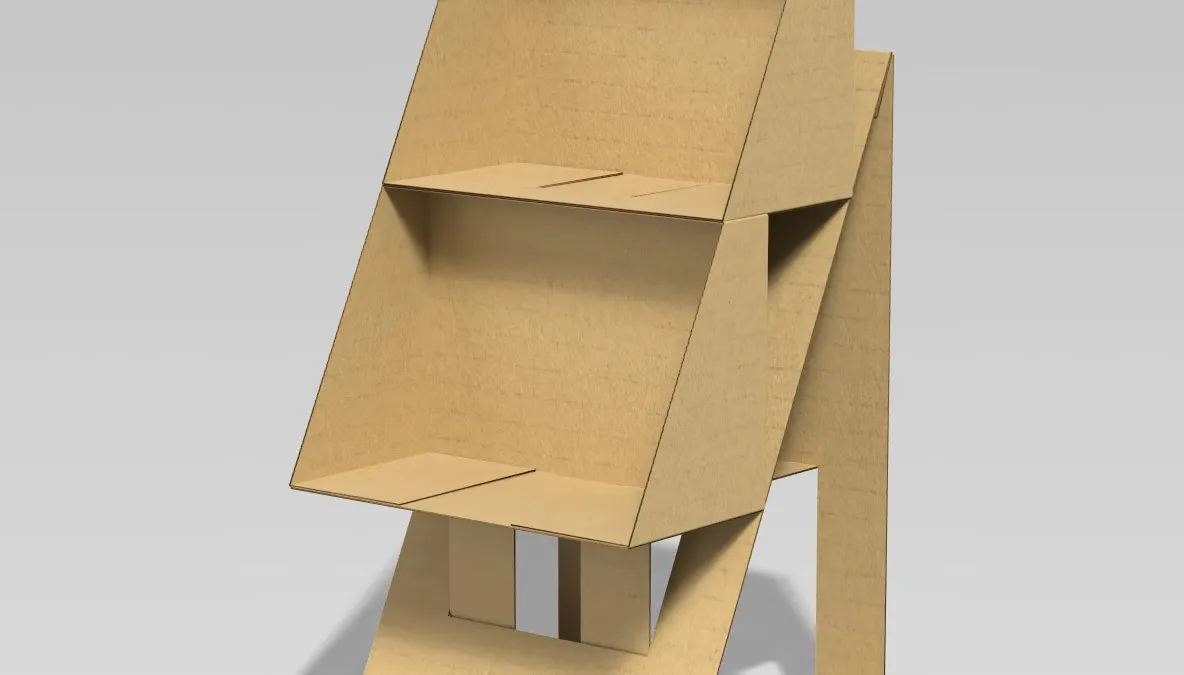
Cardboard displays are judged in two places: in a presentation, where they look like a brand asset, and on a shop floor, where they are a structure holding several kilograms of product in a space somebody is trying to walk past. Most disappointing FSDUs were designed for the first and discovered the second.
Here is what actually decides whether one works.
The load path, not the board spec
The visible failure is a sagging shelf. The cause is almost always that weight has nowhere to go.
A display carries the weight of every facing on every tier, and that weight has to travel down the uprights and into the base. Shelves that are supported at the sides and back transfer it. Shelves that are effectively cantilevered off a front panel do not, and they bow in a week.
Strong double wall board is what makes the structure possible, but the grade alone proves nothing: a well-designed single wall unit with a short shelf span will outlast a badly designed double wall one. Ask how the load reaches the floor, and be suspicious of any answer that is only about board.
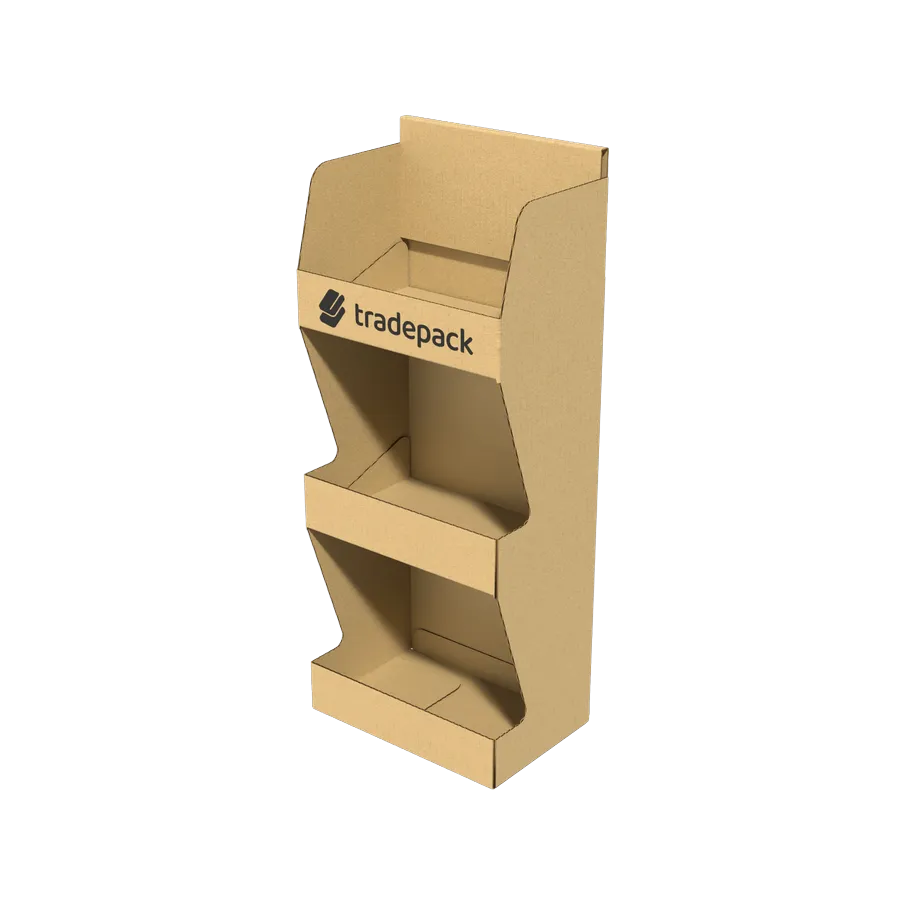
Footprint is set by the retailer, not by you
The dimension that matters most is agreed before design starts: how much floor the retailer will actually give the unit. Aisle ends, counter-side gaps and the space by a door all come with limits, and a unit that overhangs its allowance gets moved to the stockroom.
Work back from that footprint to tier count, shelf pitch and facings. A unit holding fewer facings in the space the store allows beats one holding more in a space that does not exist.
Shelf pitch, depth and angle
Three numbers that decide whether the unit sells:
- Pitch is set by product height plus enough clearance to lift the item out without catching the tier above.
- Depth controls how many facings deep the product sits. Deep shelves look efficient and empty badly, because nobody reaches to the back.
- Angle and front lip trade retention against visibility. Enough lip to hold product on an angled shelf, low enough that the front face is readable from standing height.
Assembly time is a design decision
A display that takes twenty minutes to build does not get built. The person assembling it is on a shop floor, between customers, without the drawing.
Locking tabs rather than glue, the fewest folds that will do the job, and an obvious build order are worth more than another print colour. If the unit ships filled, the outer case and the display should be designed together, so opening the case leaves the display ready rather than buried.
Print where it earns something
Plain kraft is fine, and in trade and wholesale environments often preferable. Where branding matters, up to two colours of flexographic print covers logo, type, pricing panels and a header message, applied inline with cutting and creasing.
Photographic artwork across the panels means digital print or litho-lamination through print partners, at a different price point. Worth it for a consumer brand launch; rarely worth it for a trade counter unit.
Order earlier than the promotion plan suggests
Promotional displays have an immovable in-store date and a long chain behind it: structure, sample, loading test, approval, tooling, print, production, delivery, distribution to stores. Each step is short; together they are not.
Seasonal units are specified months ahead. A new design signed off four weeks before it needs to be on a shop floor is paying for speed, assuming speed is available at all.
Counter or floor
If the product needs only a few facings, or the retailer will not give floor space, a counter unit at the till point does the job for a fraction of the material: see counter display units. Where the unit also has to ship and merchandise the stock, shelf ready packaging is the format to look at.
For floor-standing units in strong double wall board, printed or plain, see FSDU display units, or send us the product and the footprint and we will design one and quote.