Jencol Engineering reviewed: the machine shop that keeps the line running
The only supplier we buy from whose work never reaches a box. On single-pass production, obsolete spares, and why a machine shop five miles away is an asset.
By Tradepack ·
Every supplier we have written up so far ends up in the box. The liner over a seal strip, the adhesive that holds the joint, the ink on the print, the plate that carries it, the forme that cuts it.
This one does not. Nothing Jencol makes for us ever reaches a customer. It is still one of the more consequential relationships we have.
Jencol Engineering is a family firm on Burrel Road in St Ives, a few miles east of our factory in Huntingdon, with more than thirty years in precision machining and turning behind it. They work across medical, scientific, electronics, communications and printing.
Why a box plant cares about a machine shop
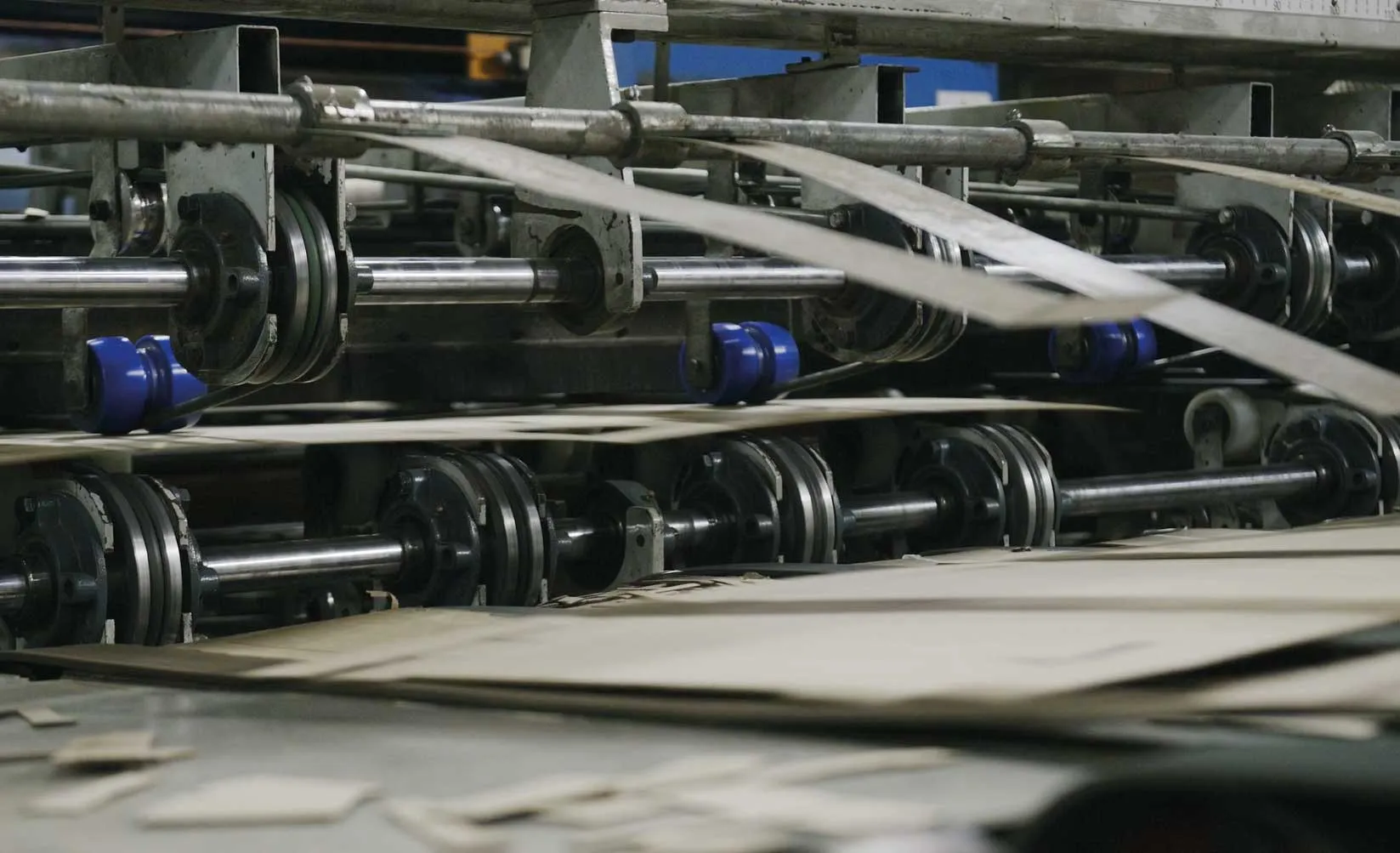
Our conversion line is single pass. A corrugated sheet goes in at the feed and comes out counted and palletised, having been printed, die-cut, creased, glued, fitted with a peel and seal strip and stacked along the way.
That is the whole commercial argument for the factory. It is also a serial dependency. There is no second route for a job, no work in progress sitting between stations that can carry on while something is fixed, and no way to run the back half of the line while the front half is down. One component stops and the order book stops with it.
Which turns an unremarkable metal part into something that decides whether a week’s production happens. The question is never whether something will wear out. It is how quickly the replacement can be in the machine.
Obsolescence is normal
Industrial converting machinery is built to last decades, and it routinely outlives the spares support of whoever made it. Manufacturers get acquired, ranges get discontinued, and at some point a part number stops existing.
That sounds like a crisis and is actually routine. The worn part is itself a specification: measured, drawn and remade, often in better material than the original. A precision machine shop turns an obsolete component back into an available one, which is the difference between a machine with a long useful life and a machine with an expiry date attached to somebody else’s stock decisions.
It also changes the economics of keeping good equipment running rather than replacing it, which is a quieter sustainability argument than the ones that usually get made. The greenest machine is generally the one already on the floor.
What they actually do
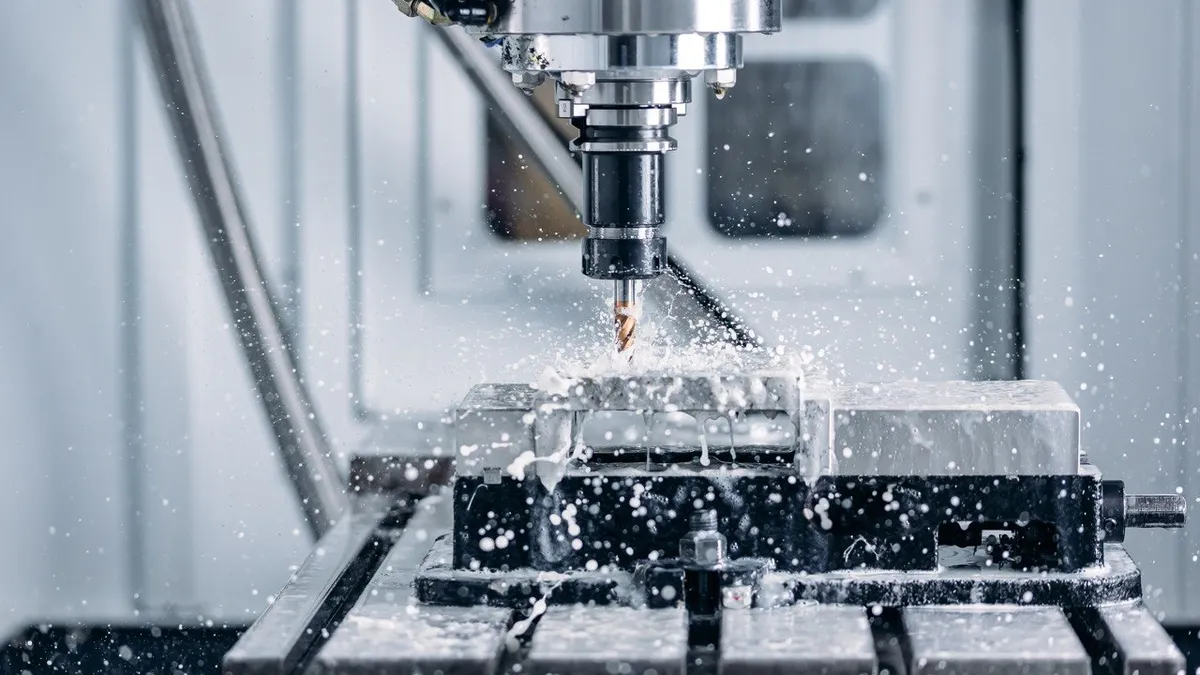
Jencol’s published capability covers precision CNC milling, precision CNC turning, manual machining, grinding and prototype machining.
The manual machining is worth noticing, because it is the one people assume is obsolete. For a one-off replacement part, setting up a manual machine is frequently faster than programming a CNC for a single piece. A shop that has kept both has kept the right answer for small, urgent jobs, which is exactly the category a broken component falls into.
Prototype work matters for the same reason in the other direction: when a modification is being tried rather than restored, the first article is the whole job.
Five miles is a specification
This is the part that does not show up on anyone’s capability list.
A part made fifty miles away and a part made five miles away can be identical and are not equivalent. One can be dropped off and collected the same day. The other involves a courier, a tracking number and somebody’s depot. On a line that is standing idle, that difference is measured in shifts.
Jencol list rapid response on quotes and lead times among their own differentiators, and in our experience proximity is most of what makes that real. It is the same reason we would rather a distributor’s packaging came from Huntingdon than from three countries away: the logistics are not a detail attached to the product, they are part of it.
The company, briefly
Two things from their own pages are worth repeating because they say something about the place.
They have machined components for GB Paralympic athletes, including parts used by David Weir. That is not corrugated machinery, and it tells you about tolerances and about the kind of work a shop is trusted with.
And they fitted solar panels in 2023 to reduce their energy use, which puts them in the same position we are in on our own electricity: doing the unglamorous version of a thing rather than talking about it.
What this has to do with your order
A repeat programme is a promise about dependable lead times. Buyers reasonably assume that promise is about capacity, and capacity is the easy half. The hard half is uptime, because an unplanned stoppage does not politely spread itself across the schedule; it lands on whoever was due that week.
Spare parts strategy is therefore a lead time strategy. It is not something a packaging buyer should ever have to think about, which is rather the point of writing it down once.
Tell us what you need manufacturing and we will quote the format, the volumes and a lead time we intend to keep.