Recyclable packaging: why corrugated leads and where it can fall down
Why corrugated is the most recycled transit packaging in the UK, what takes a box out of the loop, and how to specify packs that stay recyclable.
By Tradepack ·
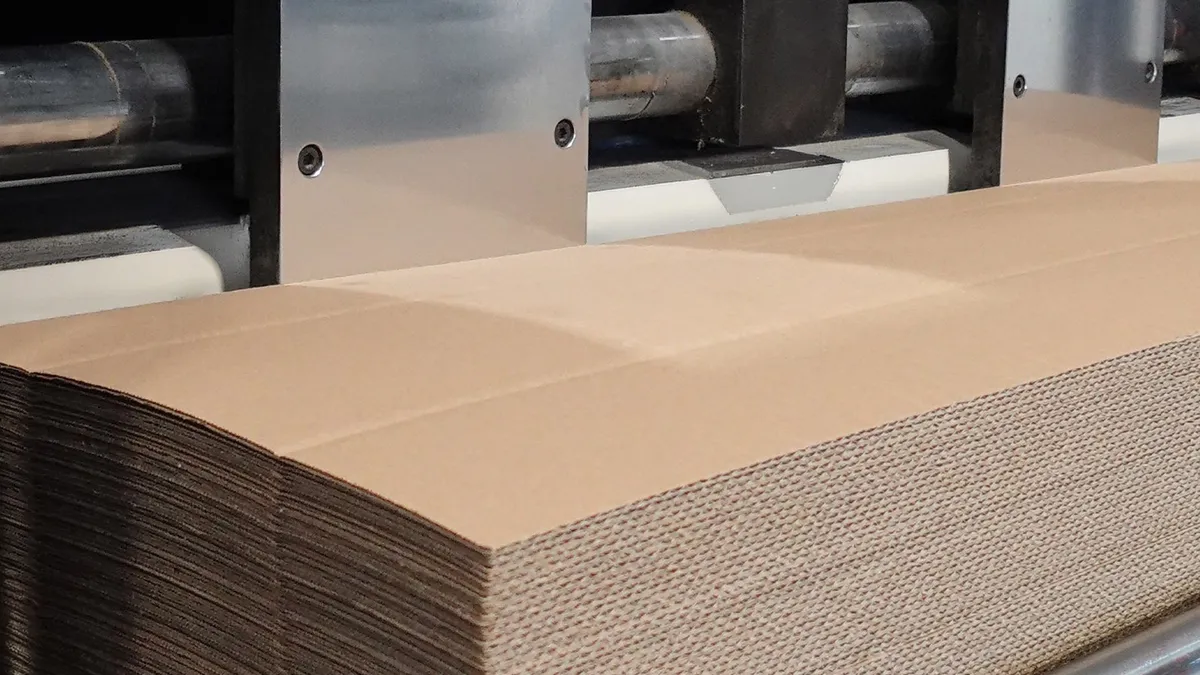
Ask a buyer why they are moving product into cardboard and “it is recyclable” usually comes first. It is a fair answer. Corrugated board has one of the best collection and reprocessing records of any packaging material in the UK. But recyclable is a property of the finished pack, not of the board on its own, and it is easy to specify a box that looks like cardboard and does not behave like it once the recipient is finished with it.
Why corrugated leads
It is collected almost everywhere. Paper and card is taken at the kerbside by virtually every UK council, and businesses in England are now required to separate it from general waste. A recipient does not have to find a special bin, look up a label or take anything anywhere. That matters more than any claim printed on the box, because packaging that is not collected is not recycled.
The loop is short and well established. Used boxes are baled, sent to a paper mill, pulped in water, screened and made into new liner and fluting. Most of the board used for UK transit packaging already contains a high proportion of recycled fibre, so the material going back in is the material coming out.
The fibre is renewable. Paper fibre shortens each time it is recycled, which is why fresh fibre from managed forests keeps entering the system. That top-up comes from a growing resource rather than a fossil one, and it can be specified from certified sources where a customer asks for it.
The components are compatible. Board adhesive is starch-based. Water-based flexographic inks wash out in the de-inking and screening stages. Hot-melt glue on a manufacturer’s joint or a peel and seal strip is removed with the other small contaminants. A plain printed box is, in practical terms, one material.
Where it can fall down
Almost every recycling problem with corrugated comes from something added to it.
- Plastic laminates and film windows. A gloss film laminated over the print, or a PET window let into a panel, bonds plastic to fibre. Mills can strip some of it out, but it adds reject, and a recipient who sees plastic may put the whole box in general waste.
- Wax and polyethylene coatings. Used for wet or chilled products, they resist the water the mill relies on to break the board down. Waxed produce boxes are a well-known example of cardboard that often cannot be recycled with the rest.
- Foil, glitter and metallic finishes. Hot foil blocking and glitter coatings look premium and add non-fibre material that has to be screened out. Small accents are usually fine; a fully metallised outer is not.
- Mixed-material fitments. Foam inserts, bubble linings or plastic trays glued inside a box turn a single-material pack into one the recipient has to take apart. Many will not. If the parts cannot be separated by hand, assume they will not be.
- Contamination. Grease, oil and food residue damage the fibre and are the main reason some takeaway and food service packaging is rejected. It is less of an issue for transit packaging, but relevant where boxes carry food, oil or chemicals.
- Oversized packs. A box twice the size it needs to be is still recyclable, but it has used twice the board, taken twice the space on the lorry and needed void fill to stop the product moving. Recyclability does not excuse waste.
Recyclable and recycled are different claims
A pack can be recyclable at the end of its life, made from recycled fibre at the start, or both. Customers sometimes ask for one and mean the other. If a customer’s own reporting asks for a minimum recycled content, or for board from certified sources, specify that alongside the grade; our board grades guide covers the difference between recycled test liners and virgin kraft. If the question is simply whether the recipient can put the box in their paper recycling, the answer depends on the finish and the fitments, not the liner.
Specifying a box that stays recyclable
- Keep it to one material family. Replace foam and plastic fitments with die-cut corrugated inserts, which locate and protect the product and go into the same bin as the box.
- Print with water-based inks and skip the film. A well-designed two-colour flexo print on kraft or white liner rarely needs a laminate to do its job. See our guide to print methods for when premium finishes earn their place.
- Think about the closure. Tape normally recycles with the box, but a peel and seal strip or tear strip removes it altogether and makes the box easier to open and flatten.
- Question barrier coatings. If a product needs moisture resistance, ask whether that is about the product or about one stage of the journey. Where a barrier is essential, choose one designed to repulp and ask for the evidence.
- Right-size the pack. Design to the product, not to the nearest stock size, and consider a lighter flute where strength allows. The most recyclable board is the board you never use.
- Make disposal obvious. A simple “recycle with paper and card” mark tells the recipient what to do. Removing any doubt is half the job.
How we approach it
We print with water-based inks, use a hot-melt adhesive certified 81% from renewable sources, and do not apply plastic laminates or coatings, so the packs we make stay in the paper stream. Our CAD team reduces blank sizes and moves designs to lighter grades wherever performance allows. See responsible manufacturing for the detail, including the information we can supply to support your customers’ environmental reporting.
If you are moving a product out of plastic packaging, or reviewing an existing pack against a customer’s sustainability requirements, send us the current specification with a quote request and we will tell you where it can be simplified.