Techlan Re-Liner reviewed: the recycled liner behind our peel and seal
A look at Techlan's Re-Liner recycled silicone release liner, the paper you peel off a seal strip, and why a recycled liner is worth specifying.
By Tradepack ·
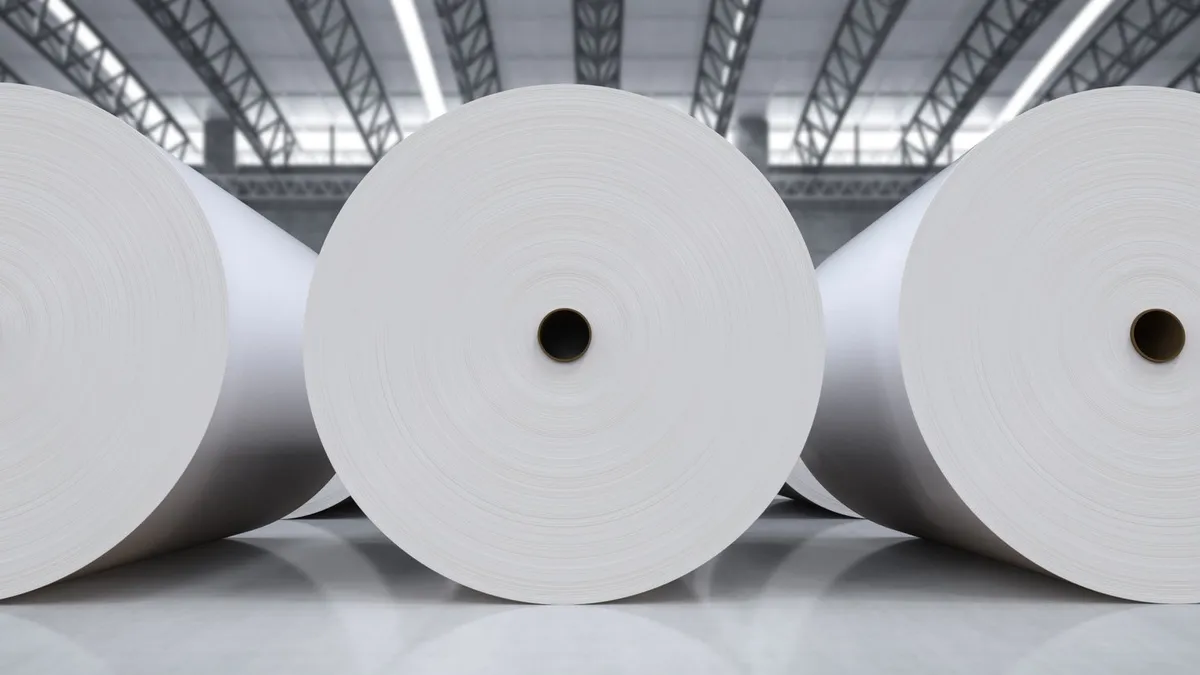
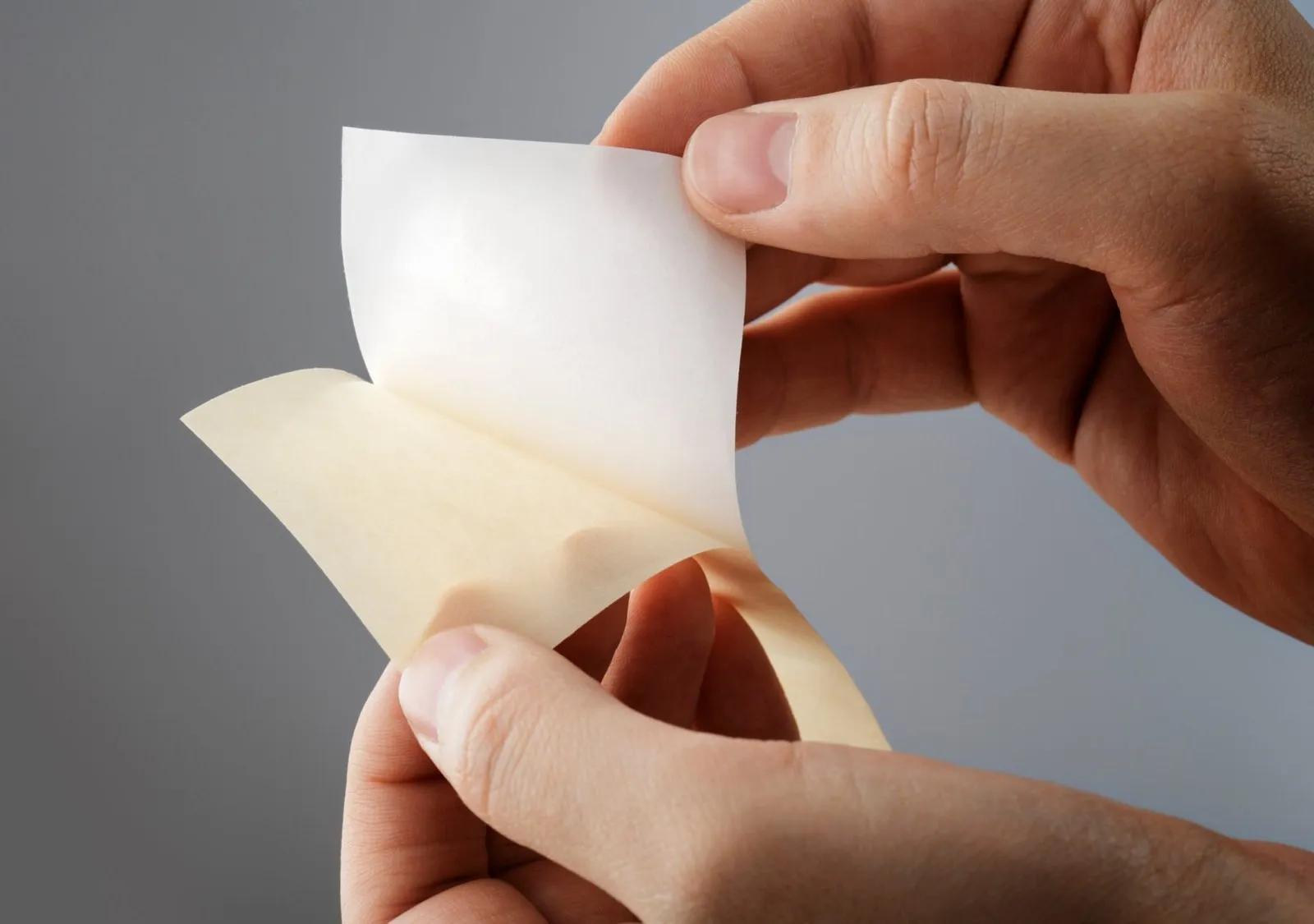
Every peel and seal pack we make carries a strip of pressure-sensitive adhesive, and every strip carries a piece of paper over it. The packer pulls that paper off, drops it in the bin and closes the box. It is the least glamorous component in the whole pack, it never appears on a specification sheet that anyone reads, and it is the only part of a peel and seal pack that does not recycle with the rest.
Which is why the liner is worth paying attention to, and why ours comes from Techlan.
Techlan Ltd is a UK manufacturer of recycled silicone release papers and films, based at Dura Park in Llanelli, south Wales. Its Re-Liner range replaces prime-grade release paper with a 100% recycled equivalent, and it supplies into labels, print and graphics, adhesive tapes, fibre composites, automotive and e-commerce packaging.
The problem it solves
Release liner is produced in enormous quantities and almost all of it is used once. It comes off label webs, tape production, laminating lines and adhesive-backed products of every kind, and it is genuinely difficult to recycle: the silicone coating that makes it release cleanly is the same coating that makes it awkward in a paper mill, and the waste usually arrives contaminated with adhesive. The default destination has been landfill, at a cost to the manufacturer producing it.
Techlan’s answer is a patented recovery process rather than a disposal route. Waste liner is collected, cleaned, inspected and converted back into usable liner, either for the same manufacturer to use again or for sale into a different sector.
How the process runs
Techlan describes it in five stages, and the two in the middle are the interesting ones.
- Waste arises. Liner is discarded as a by-product of production or as the carrier from adhesive-backed products.
- Collection. A nationwide service takes anything from a single pallet to full truckloads, which is what makes it practical for smaller converters rather than only for large plants.
- Cleaning. The waste rolls go through Techlan’s cleaning process to remove contamination and defects. The company’s own description of it is worth repeating: highly energy efficient, and using no water and no chemicals.
- Quality assurance. Web inspection systems monitor each reel in real time, which is the part that decides whether a recycled liner is actually usable on a production line or merely well-intentioned.
- Conversion. Reels are slit to the width and length the customer needs and supplied back for re-use.
The scale is not token. Techlan reports more than 2,230 tonnes of waste recycled and over 30 million square metres of Re-Liner supplied, to more than 1,000 customers.
The specification that matters for packaging
For e-commerce packaging applications, the Re-Liner range runs 60, 80, 90 and 100 gsm on CCK and glassine base papers, single-side siliconised, with easy to medium release values. It is supplied in coils from an 18 mm minimum slit width or on spools from 25 mm, in lengths up to 20,000 metres depending on grammage.
Those numbers matter more than they look. A liner that is light enough to run economically but stable enough to lay flat is what lets an adhesive strip be applied inline at speed without wander or lift. Techlan specify the range for exactly that: lay-flat performance and dimensional stability for reliable lay-down on a closure strip. On our line, the peel and seal strip is applied as the blank runs through, so a liner that misbehaves does not cause a quality problem at the end of the shift, it causes one immediately.
What it changes for the packs we make
Nothing, on the bench. That is the point. The strip exposes cleanly, the adhesive performs the same way, and the packer notices no difference.
What changes is upstream. The liner on our peel and seal is made from recovered liner waste rather than from virgin siliconised paper, which keeps a difficult waste stream out of landfill and takes new fibre out of the supply chain for a component that is thrown away within seconds of being used.
It is worth being straight about the limits. Recycled content in the liner does not make the liner recyclable for the person who peels it off, and we would rather say so than let a customer repeat a claim that will not survive a buyer’s questionnaire. The honest position is this: the box recycles with paper and card, the liner does not, and the liner itself is made from recycled material and diverts waste that would otherwise be buried. If a customer needs evidence for their own reporting, we can supply the detail, as covered in responsible manufacturing.
Why we bother with this level of detail
A peel and seal pack is a system: the board, the adhesive, the liner and the applicator all have to agree with each other. Our hot-melt adhesive is certified 81% from renewable sources and carbon negative, our inks are water-based, our electricity is a zero carbon supply, and the liner is recycled. None of those decisions is visible in the finished pack, and all of them are the sort of thing a distributor’s end customer eventually asks about.
See peel and seal packaging for the formats we apply it to, peel and seal versus tape for what it does to a packing line, or request a quote for your next format.