The carbon-negative hot melt holding our boxes together
Technomelt Supra ECO, the Henkel adhesive we buy through Interlock: 81% renewable content, a negative cradle-to-gate footprint, and what that really means.
By Tradepack ·
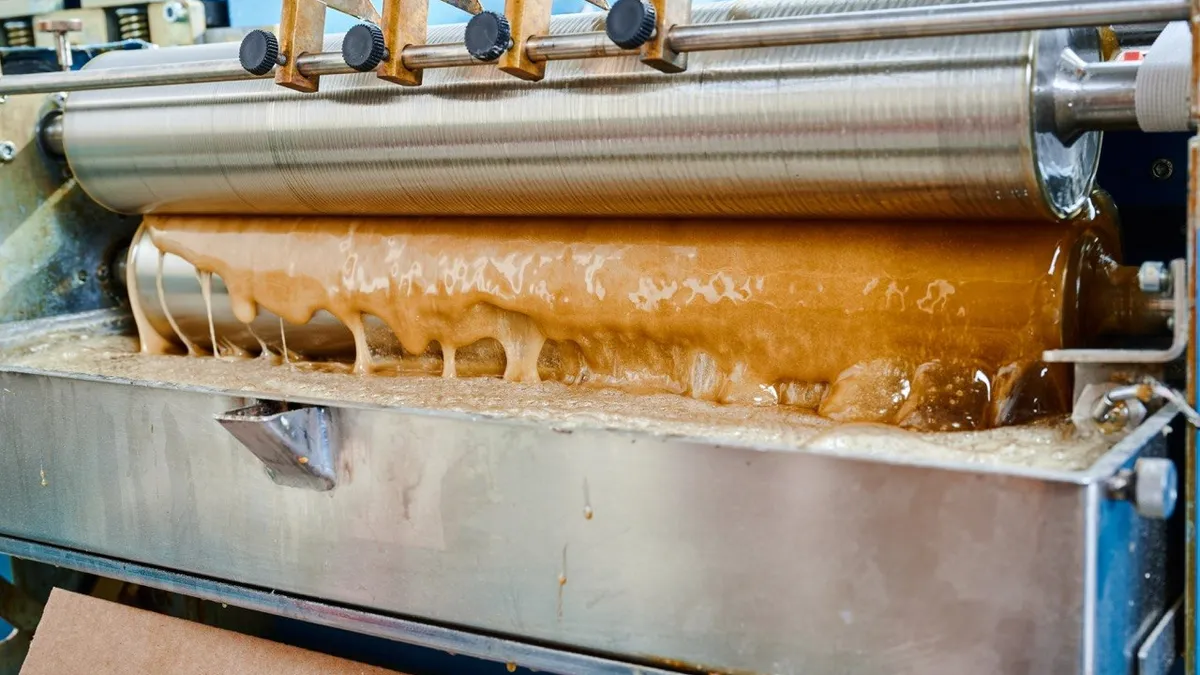
Nobody specifies a box by its glue. The enquiry arrives with dimensions, a board grade, a quantity and sometimes a print, and the adhesive is assumed. It is also the component that decides whether the manufacturer’s joint holds when a pallet is double stacked, whether a peel and seal strip bonds first time at a packing bench, and whether the pack still counts as one material when it reaches a paper mill.
Ours comes from Interlock Adhesives, and it is worth explaining what it is.
Interlock Adhesives is a UK adhesive supplier serving packaging converters, with the technical support that goes with it: application advice, equipment, and the grades that suit a particular line rather than a catalogue default. The grade we run for end-of-line packaging is Technomelt Supra ECO.
Developed by Henkel and Dow
Henkel developed Supra ECO with Dow, and describes it as the world’s first fully certified carbon-negative hot melt. The headline claims, all Henkel’s own:
- 81% renewable content, certified under ISCC using a mass balance approach.
- A cradle-to-gate footprint of minus 0.4419 kg CO2e per kilogram of adhesive, measured on a 100-year global warming potential basis.
- Raw materials including tall oil, a by-product of paper milling rather than a crop grown for the purpose, with the bio-based content traceable through the supply chain.
- Certified food safe, and compatible with the paper recycling stream under EPRC guidelines.
Henkel’s own comparison puts a conventional polyolefin hot melt at roughly 328 tonnes of CO2 a year at 100 tonnes of annual adhesive use, against a 372 tonne saving for Supra ECO at the same volume.
What mass balance actually means
This is the part most sustainability pages skip, so here it is plainly.
A mass balance claim does not mean that 81% of the molecules in the drum we open came from tall oil. It means that certified renewable feedstock equivalent to 81% of that volume entered the manufacturer’s process, and that an independent scheme, ISCC in this case, audits the accounting that assigns it to a particular product. It is the same mechanism used for renewable electricity on a shared grid.
That is a real, audited claim, and it is also a bookkeeping one. It is worth knowing which you are repeating before you put it in a tender response. The honest version is: certified 81% renewable content under a mass balance scheme, with a negative cradle-to-gate footprint published by the manufacturer. We would rather give a distributor that sentence than a louder one that falls over under a buyer’s questionnaire.
The same caution applies to “carbon negative”. It describes the adhesive from raw material to factory gate. It is not a claim about the finished box, it does not offset anything else in the pack, and the adhesive is a very small fraction of the weight of a corrugated case. It is a good decision rather than a transformative one.
Why it works for us on the line
The commercial argument would not survive if the adhesive were awkward to run, and this is where Supra ECO earns its place: Henkel’s position is that it behaves like a standard Supra product, with the same bond performance and lower adhesive consumption than conventional EVA grades.
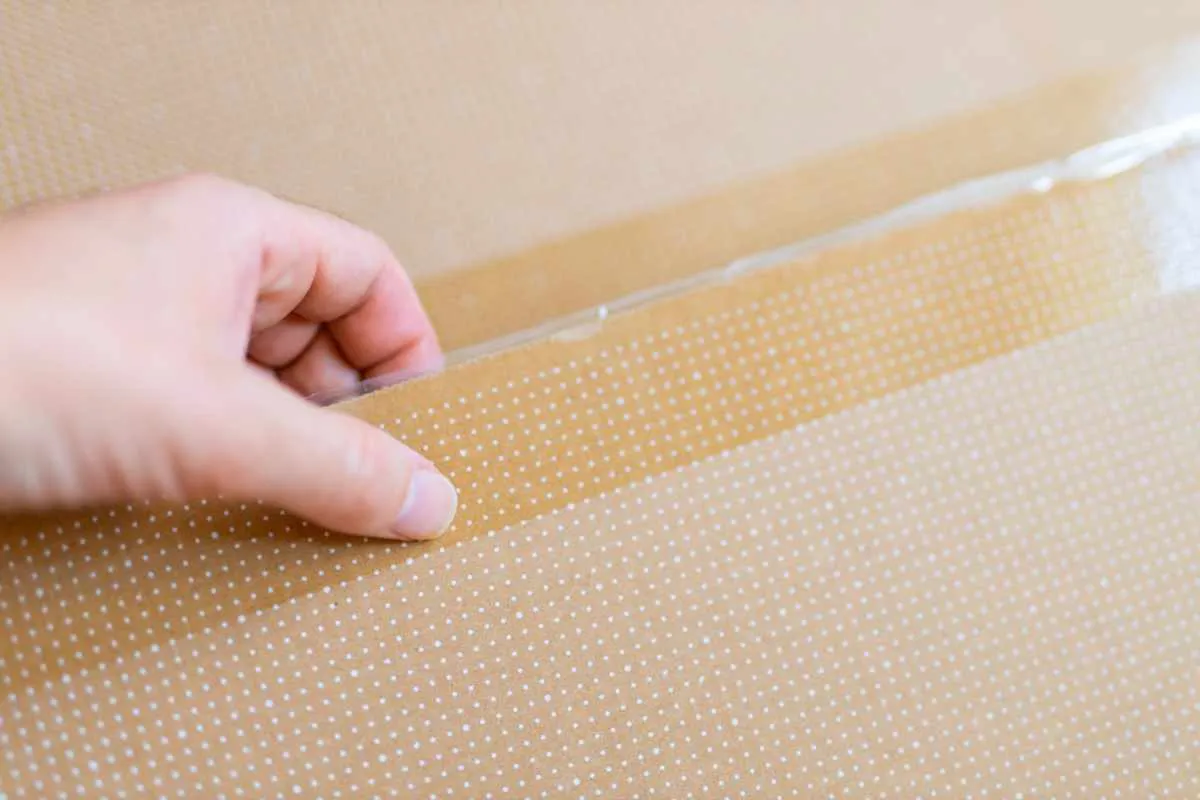
On our single-pass conversion line the adhesive has to work in two different roles. It forms the manufacturer’s joint and the hot-melt glue lines that give a carton its rigidity, applied in controlled patterns that avoid squeeze-out so cases erect consistently at a packing bench or through an automated erector. It also feeds the inline applicator that lays the pressure-sensitive strip on peel and seal formats, where the bond has to be immediate and permanent: the board tears before the adhesive lets go.
A grade that needed a slower line speed or a different temperature window for either of those would cost more than it saved.
Where it sits in the rest of the pack
The adhesive is one of four decisions that are invisible in a finished box and that a distributor’s end customer eventually asks about:
- The board is corrugated, recyclable, and specifiable from renewable and sustainably managed sources.
- The inks are water-based flexographic, which wash out at the de-inking stage.
- The release liner on peel and seal is 100% recycled, as covered in our review of Techlan’s Re-Liner.
- The adhesive is this one.
Behind all of them the factory runs on a zero carbon electricity supply backed by Renewable Energy Guarantees of Origin and nuclear declarations. The detail, including what we can supply for your own environmental reporting, is on responsible manufacturing.
None of it changes the box on the bench. All of it changes the answer you can give when someone asks what is in it.
Tell us what you are packing and we will quote the format, and supply the documentation behind it if your customer needs it.