Die-cut or standard style: when custom tooling is worth the outlay
What a cutting forme costs you, what die-cutting buys that a slotted case cannot, and how to work out the run length where custom tooling starts to pay.
By Tradepack ·
Every bespoke format starts with the same question: is this worth a cutting forme? It is one of the few packaging decisions with a genuinely numerical answer, and it is routinely decided on instinct instead.
What a forme is, and what it costs you
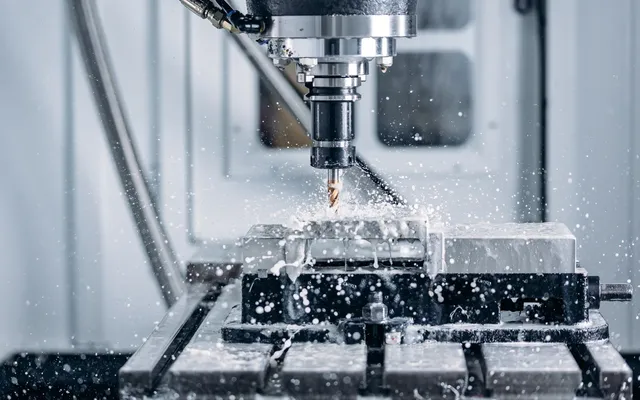
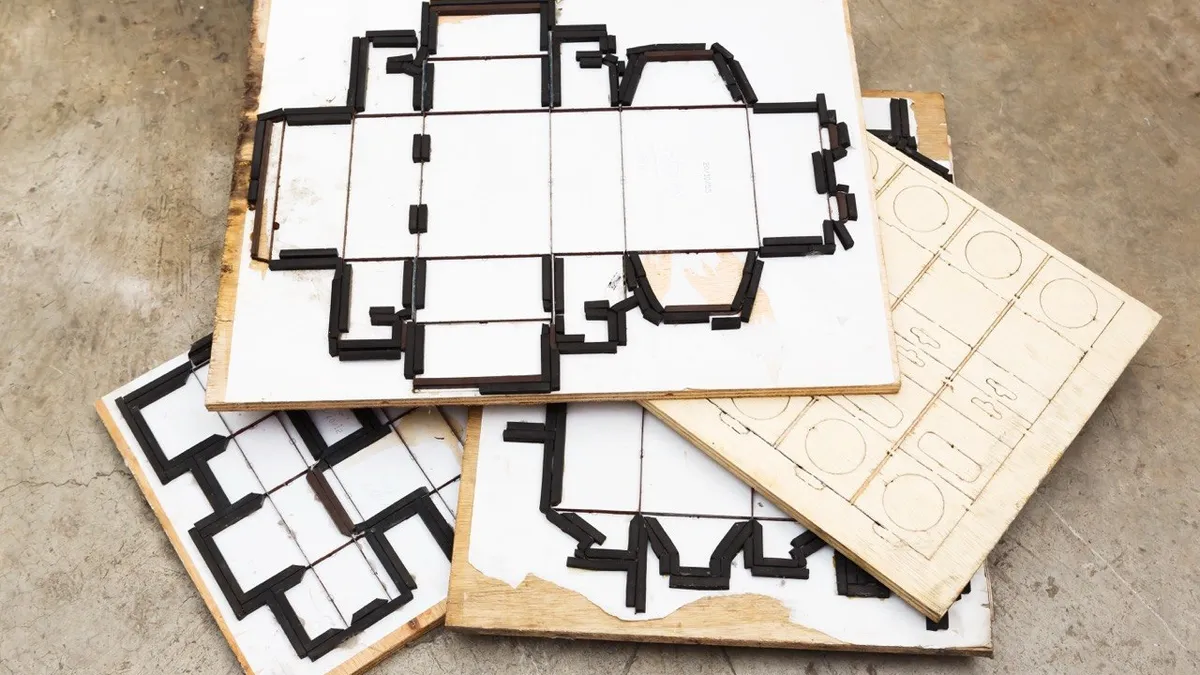
A cutting forme is a sheet of plywood with steel rules set into laser-cut slots: sharp knives where the board is cut, blunter creasing rules where it folds, and rubber ejection to push the blank out. It is made for one design at one size. Change the dimensions and you are making another one.
Commercially it behaves like a mould, not a consumable. It is a one-off cost that belongs to the design rather than to the order, it is held for repeat runs, and only the first order carries it. That changes the arithmetic completely: tooling is expensive against one run and cheap against five years of a format you will keep making.
What die-cutting buys that a slotted case cannot
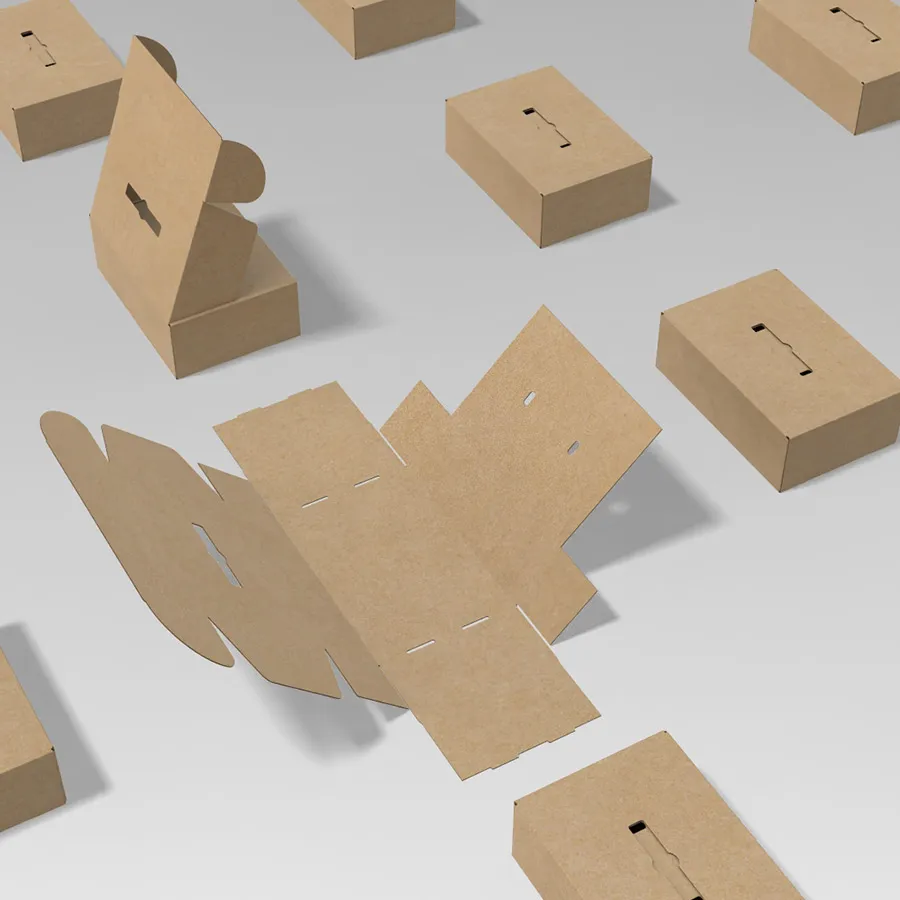
A standard slotted case is cut and creased in straight lines from a rectangular blank. That covers an enormous amount of packaging perfectly well. Die-cutting earns its keep when the pack needs something those straight lines cannot produce:
- A one-piece pack with no glued joint, such as a 0427 mailer or a book wrap, which folds up on the bench with no tape.
- A crash-lock base, where the glued flaps interlock as the box is squared up.
- Shaped features: hand holes, tear strips, perforations, tuck fronts, locking tabs, display windows and tray lips.
- Integral fitments, where the retention for the product is cut into the same blank rather than added as a separate insert.
- Efficient nesting, where an irregular blank is laid out to take more boxes from the same sheet than a rectangular layout would.
Where the saving actually comes from
Tooling does not pay for itself through the die-cutting. It pays through what the design then does, every single unit:
Board area. A blank designed around the product rather than around the nearest stock size uses less board. On a high-volume line that difference compounds faster than anything else on the specification, as our piece on what drives a bespoke box price sets out.
Void fill removed. A pack that fits does not need filling. That is material, labour and volumetric weight gone at once.
Seconds on the bench. No tape, no assembly, no hunting for fill. Multiply by the daily pack rate and the labour saving is usually the largest number in the comparison.
Carrier band. A few millimetres of thickness can move a whole product line into a cheaper postage band. For anything posted in volume, this one frequently dwarfs the rest.
Set those annual savings against the one-off tooling and the answer is arithmetic rather than opinion. Where the volume is low, or the format will not be repeated, the answer is usually a stock slotted case and no tooling at all.
When a standard style is the right answer
It is worth saying plainly, because it is often true. A 0201 case is cheap, available, needs no tooling and is understood by everyone who handles it. If the product is robust, the pack is not part of the customer experience, and the volumes do not justify engineering, the standard case wins and the money is better spent elsewhere.
The same applies to one-off and seasonal work. Our digital flatbed cuts from the CAD file with no forme, which covers samples, trials and genuinely short runs at a higher unit price and no tooling commitment.
Decide before tooling, not after
The expensive version of this decision is changing a design once the forme exists. A crease in the wrong place is free to move on a sample and costs a new forme afterwards.
So the sequence matters: structural design on CAD, a cut sample on the flatbed, real product packed into it on the real bench, approval, then tooling. By the time a forme is ordered, nobody should be guessing.
What to send for a quote
The internal dimensions, the product weight, how it ships, the annual volume and call-off pattern, the carrier band if it is posted, and what the current pack costs you. That is enough for us to put both options in front of you: a standard style with no tooling, and a die-cut design with the tooling priced and the per-unit saving shown.
See custom die-cut packaging for the formats we tool for, or send us the details and we will quote both ways.