
Edge crush and box compression: what the test numbers mean for stacking
What edge crush figures measure, how they relate to box compression strength, and why humidity and stacking pattern decide whether a pack holds up.
By Tradepack ·
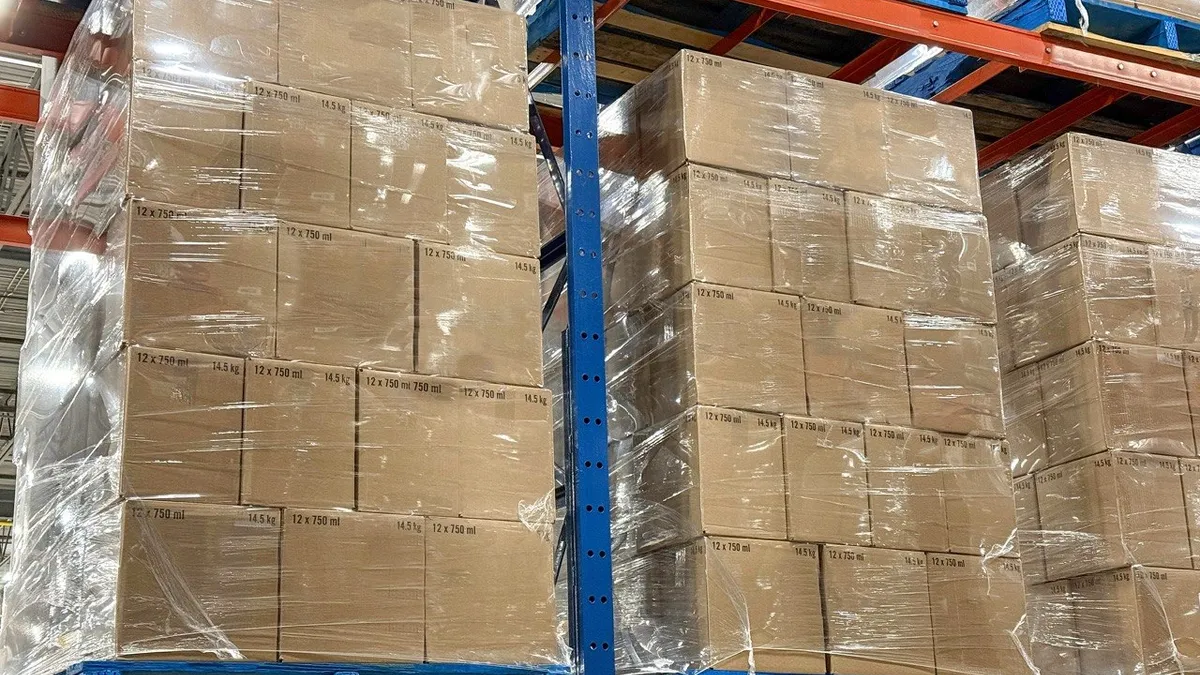
Edge crush comes up in two situations: a customer has had a stack collapse and wants a stronger box, or a buyer has been handed a specification with a number in it and wants to know whether it is the right number. Both conversations go better when everyone understands what the figure describes, and more importantly what it does not.
What ECT actually measures
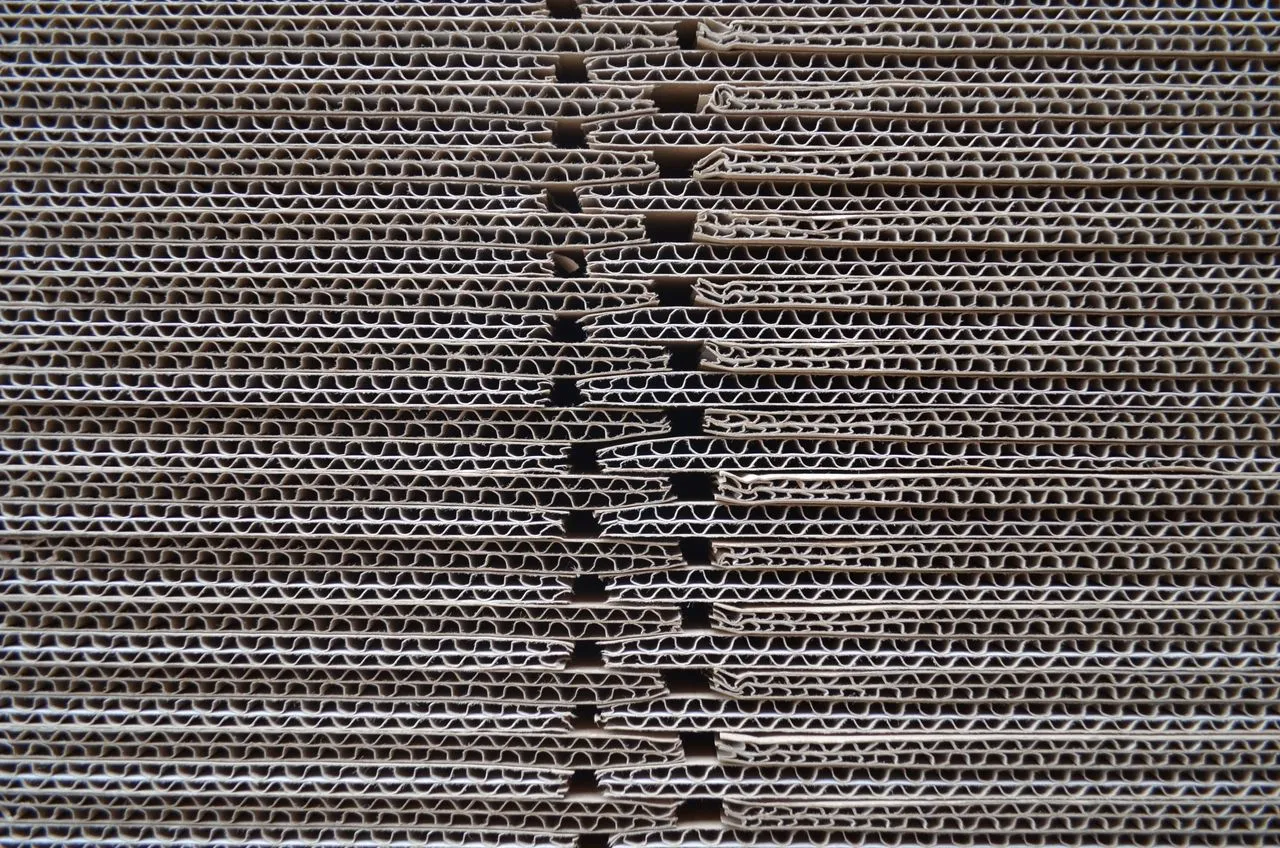
The edge crush test takes a small sample of corrugated board, stands it on its edge, and presses until it crushes. The result is the force per unit width that the board withstands, quoted in kilonewtons per metre in Europe or pounds per inch elsewhere.
Two things follow from that description. It is a test of the board, not of the box. And it measures resistance to a load pressing down through the flutes, which is exactly the load a case sees when another pallet is stacked on top of it. That is why it predicts stacking performance better than the older burst test, which measures resistance to something pushing through the wall.
ECT is not box compression strength
The figure buyers actually need is box compression strength: how much load the finished case carries before it collapses. It is related to ECT, but it is not the same number, and it depends on the box as well as the board.
Three things drive it:
- The board’s edge crush value. More is stronger, all else being equal.
- Board thickness. A thicker flute profile resists buckling better at the same ECT.
- The perimeter of the box. A larger case has more wall to carry the load, so it is stronger in absolute terms than a small one made from the same board, which surprises people.
That last point is why a specification that names only a board grade tells you less than it looks. The same board makes a strong large case and a weak small one.
Where the number goes wrong in the real world
Laboratory figures are measured on fresh board, in conditioned air, loaded briefly. Warehouses are none of those things.
Humidity. Board takes up moisture from the air and loses compression strength as it does. A case that tests comfortably in a dry store can fail in a humid one, or in chilled distribution, with the same product inside. This is the single most common reason a pack that “worked last year” stops working.
Time under load. Compression strength is measured over seconds. A pallet sits in racking for weeks. Board creeps under sustained load, so the long-term figure is a fraction of the test value, and a safety factor is normal rather than cautious.
Stacking pattern. Compression strength lives in the corners and vertical edges. A column stack, corner over corner, uses it. A bonded or interlocked pattern puts weight in the middle of panels that cannot carry it, and can cost a large share of the stack’s capacity. Changing the pattern is free; changing the board is not.
Pallet overhang. A case hanging over the edge of the pallet has nothing under its corner. Overhang of even a couple of centimetres measurably reduces what the stack carries.
Holes in the box. Hand holes, vents, perforated tear strips and display windows all remove material from load paths. They are often worth having, but they have to be accounted for rather than discovered.
How to specify, without guessing
The most useful thing a buyer can give a manufacturer is not a board grade. It is the job:
- the filled weight of one case
- how many high they stack, on the pallet and in racking
- how long they sit, and in what conditions, including chilled or humid storage
- the stacking pattern, and whether there is overhang
- whether the case has hand holes, vents or a tear strip
From that, the board and the construction can be chosen to hit the compression strength the stack needs, with a sensible margin. Our guide to board grades covers the flute and wall options that result, and how to measure a box covers getting the dimensions right so the stack lines up in the first place.
Test the pack, not the theory
Where the stack really matters, the honest answer is to put it under load. We cut samples on the digital flatbed before tooling so a design can be filled, stacked and left, which tells you more than any calculation. It also tends to end the argument about whether a lighter grade would do, in one direction or the other.
Send us the load and the stack and we will specify the board and the case to carry it.