The 0201 explained: sizing, board and flap options for the workhorse case
How the FEFCO 0201 is built, how to specify it correctly, the flap variants worth knowing, and when to step up to a different style.
By Tradepack ·
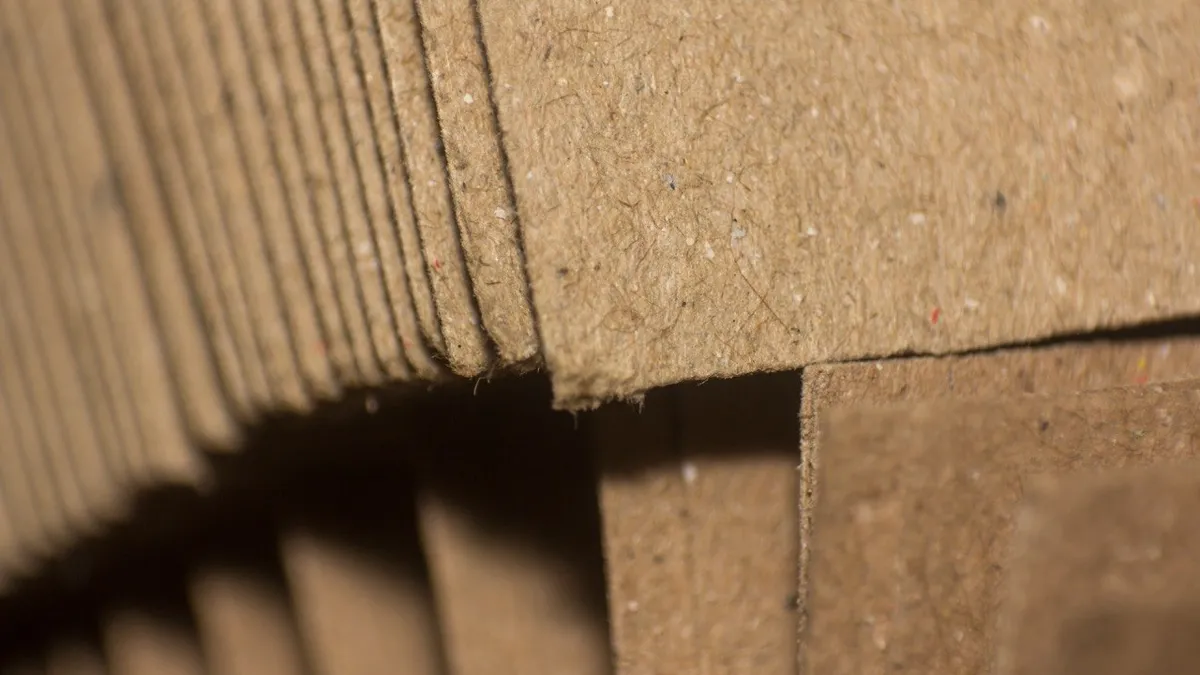
Ask a packaging distributor which style they sell most of and the answer is almost always the same four digits. The FEFCO 0201 is the box everyone pictures when they think of a cardboard box, and it earns that position by being the cheapest reliable way to get a corrugated case around a product.
How it is built
The 0201 is cut from a single blank of corrugated board. Four panels form the walls, joined at one corner by the manufacturer’s joint, which is glued during production. Four flaps extend from the top and four from the bottom. The two outer flaps on each end are half the width of the box, so they meet in the middle when folded; the two inner flaps sit beneath them. The box ships flat and is erected by squaring it up, folding the bottom flaps, and taping.
That construction is the reason the 0201 is so economical. The blank is a simple rectangle with slots cut into it, so board waste is minimal and the case runs fast through a slotter or a rotary die-cutter with inline gluing.
Specifying one correctly
A 0201 is specified by three things.
Internal dimensions, given as length by width by height in millimetres. Length is the longer of the two base dimensions, width the shorter, and height is the dimension the flaps close across. Internal, not external: the manufacturer adds board thickness and fold allowances to calculate the blank. The difference is a flute thickness on each side, and it is the most common cause of a box that does not fit: see how to measure a box for the convention.
Board grade. Wall type, flute and paper weights. Single wall B or C flute covers most transit and storage applications; E flute suits lighter contents where a smoother print surface matters; double wall BC is for dense loads, high stacks and long storage. Tell the manufacturer what goes in the box and how it is shipped and stacked, and let them recommend the grade rather than over-specifying.
Print, if any. Plain kraft is standard. Up to two colours of flexographic print handles logos, handling marks and SKU identification.
The flap variants worth knowing
The 0201 has close relatives that solve specific problems.
- 0200. The same box without top flaps, used with a separate lid or as a tray. Common for storage cartons and removals.
- 0203. Full-overlap flaps: the outer flaps are full width and overlap completely, giving a double thickness of board top and bottom. Chosen for heavy or fragile contents and for stacking strength.
- 0202. Outer flaps overlap by a set amount but do not meet fully. A middle ground when 0203 is more board than the job needs.
- 0204. Centre special: the inner and outer flaps both meet in the middle, giving double thickness across the whole top and bottom.
The base 0201, with flaps that meet, is right for the majority of transit work. Move to 0203 or 0204 when the contents are heavy or the case will be stacked high.
Closures and options
Tape is the default closure. For e-commerce packing lines a pressure-sensitive peel and seal strip can be applied to the outer flaps during manufacture, removing tape from the bench and giving a tamper-evident close. Hand holes can be die-cut into the end panels for cases that are carried. A tear strip can be added for easy opening.
Where it stops
The 0201 is a transit case. It protects contents in bulk, stacks on pallets and stores cheaply. It is not a presentation box, it does not erect without tape, and it does not hold a product in place. When the application calls for those things, the answer is a different style: a 0427 mailer for e-commerce unboxing, a crash-lock base for tool-free erection, or a die-cut design with integral retention. A good manufacturer will say so at the brief stage rather than sell a 0201 into a job it will not do well.
Buying it at volume
Because the 0201 runs so efficiently, unit cost at trade volumes is driven mostly by board grade and blank size. Two things bring that down without changing what the box does: a CAD review of the blank to remove wasted board, and a review of the grade against the actual load, since many 0201 specifications carry more board than they need. Both are worth asking for before a repeat programme is locked.
Send us the dimensions and the quantity and we will come back with a drawing, a board recommendation and a trade price.