Water-based flexo inks: what we print with and why it matters
The inks we print corrugated with come from Antonine, a UK manufacturer. What water-based flexo ink is, why it recycles, and what else the range can do.
By Tradepack ·
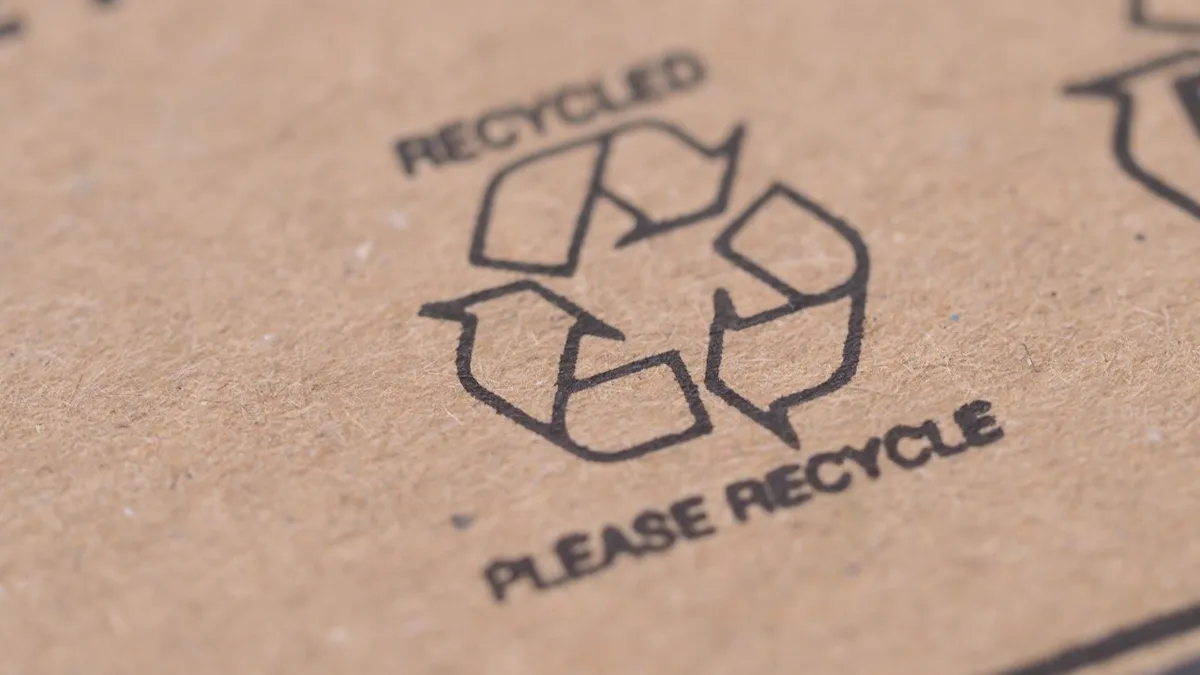
Print is the only thing we add to the surface of a corrugated box, which makes it the only thing that can take the box out of the paper stream. It is also the thing a distributor’s customer looks at hardest, because it carries their brand. Those two facts pull in opposite directions often enough that it is worth saying exactly what our inks are.
They come from Antonine Printing Inks.
Antonine Printing Inks Ltd was established in 1976 and describes itself as a leading independent ink manufacturer in the UK and Ireland. Its water-based range runs under the Dolphin, Flexogloss, Tissuefast, Biotherm, Thermaflex, Bellaria and Pacific names, alongside a separate solvent-based range that corrugated post-print does not need.
Why water-based, specifically
A flexographic ink is a pigment carried in something that has to leave. In a solvent ink that carrier is a volatile organic solvent; in a water-based ink it is water.
For corrugated post-print that choice is close to a non-decision once you follow it through. Water-based ink sits on an absorbent kraft or white liner and dries into it, which suits the open, fibrous surface of corrugated board far better than it would suit film. It keeps volatile organic compounds out of a factory where people work all day. And at end of life it is released and screened out during pulping, so the printed box behaves like a plain one, which is the whole argument in our guide to recyclable corrugated packaging.
The trade-off is honest rather than hidden: water-based ink on kraft gives a softer, warmer result than litho on a coated surface. For logos, type, pricing panels, barcodes and handling marks, which is what trade packaging actually carries, that is not a limitation. For photographic artwork it is, and that is what digital and litho-lamination through our print partners are for. Our print methods guide covers which is worth the difference at a given run length.
The dispensing system matters more than it sounds
Antonine supplies custom-built ink dispensing systems with Windows-based software, run from a set of high-strength base inks rather than a shelf of pre-mixed colours.
That sounds like a housekeeping detail and it is not. Mixing from base inks on demand means a Pantone match is produced to a recorded formulation rather than eyeballed, so the same colour is the same colour on a repeat order six months later. It also cuts two kinds of waste at once: less part-used stock sitting in a corner going out of specification, and less ink mixed than a job needs.
The company’s Dolphin system goes a step further, supplied for both pre-print and post-print so one ink technology covers both. For a converter that means press returns can be reworked instead of written off, and fewer separate products have to be held.
Compliance, because somebody will ask
Trade customers increasingly pass a questionnaire down the chain, and ink is where those questions land. Antonine’s published position:
- ISO 9001:2015 quality management and ISO 14001:2015 environmental accreditation.
- Membership of SEDEX, the Ethical Data Exchange.
- A SEPA licence covering compliance with national environmental legislation.
- Full REACH compliance, with no substances of very high concern used.
- All materials conforming to the EuPIA Inventory List.
- Good manufacturing practice ensuring compliance with EC 1935/2004 and 2023/2006, the food contact regulations, and with Swiss Ordinance 817.023.21 (Annex 6).
Those are the supplier’s statements rather than ours, and we can pass the underlying documentation on where a customer’s specification calls for it.
What else the range can do
Most corrugated work needs two colours on kraft and nothing more. It is worth knowing what is available when it does not:
- Barrier coatings, which can be tailored to achieve a specified COBB value, with some suitable for direct food contact.
- Thermochromic inks, reversible or non-reversible, activated at a chosen hot or cold temperature.
- Photochromic inks, invisible as printed and appearing in sunlight.
- UV-invisible inks, visible only under UV light, in a range of colours.
- A security ink range, some of it developed under non-disclosure.
- A Fanal-free range, where a specification excludes Fanal pigments.
Several of those are speciality applications rather than anything a two-colour corrugated line runs as standard, and they would be specified job by job. If your customer’s application points at one, say so at enquiry stage rather than after tooling.
What we print in house
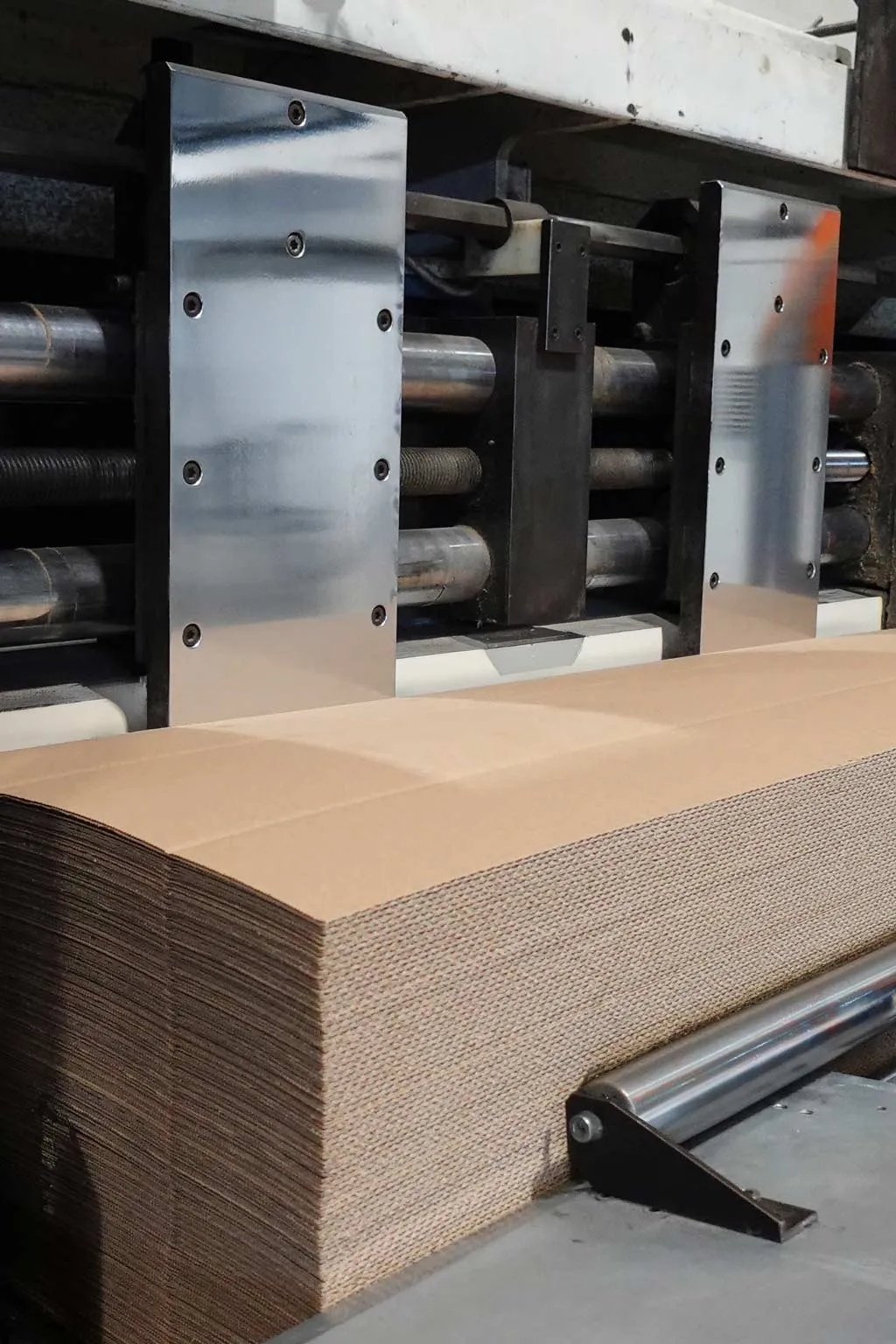
Up to two colours of flexographic print with Pantone matching, applied inline as the sheet runs through the conversion line, so print, cut, crease, glue and peel and seal all happen in one pass with no secondary process and no separate lead time. The detail is on flexographic printing.
Send us the artwork and the format and we will tell you what it will look like on the board you are actually buying.