Subscription box packaging: unboxing that survives the post
How to specify a subscription box that still looks right after the courier: format, board, inserts, inside print, reseal strips and consistent repeat supply.
By Tradepack ·

A subscription box has to do two jobs that pull in opposite directions. It is the only physical contact most subscribers have with the brand, so the moment of opening matters more than it does for a normal parcel. It is also shipped every single month, through a network that does not care, at a cost that repeats twelve times a year per subscriber.
Get the balance wrong in one direction and you have a beautiful pack that arrives dented. Get it wrong in the other and you have a reliable brown box nobody photographs.
Pick the format for the contents, not the mood board
The one-piece die-cut mailer, usually a 0427, is the default for good reason: it arrives flat, folds up in one motion, closes without tape and presents cleanly when opened. For most boxes of mixed contents it is the right answer.
A crash-lock base is worth the extra unit cost once the pack rate is high enough. If a fulfilment team is assembling thousands of boxes a month, the seconds saved on every base add up faster than the difference in price.
A letterbox-depth pack changes the economics completely for flat ranges such as coffee, tea, cosmetics samples, stationery or prints. Staying inside the Large Letter band removes failed deliveries and drops the postage for every box, every month.
A book wrap suits flat, rigid contents and folds down to what is inside, so one blank covers a range of depths.
The economics are monthly, not per unit
This is the part that separates subscription packaging from ordinary e-commerce. Every decision multiplies by twelve and by the subscriber base.
A few millimetres of unnecessary depth that pushes a pack into the next carrier band is not a one-off cost, it is a recurring one. The same goes for void fill that a right-sized pack would not need, and for the seconds each pack spends on the bench. Our guide to sizing mailers to carrier bands covers where the thresholds sit and how board thickness interacts with them.
Hold the contents still
Most subscription boxes carry several items of different shapes. Loose fill lets them move, arrive scuffed and spill out when the lid opens.
Die-cut corrugated inserts solve both problems at once: each item has a position, nothing moves in transit, and the opening is staged rather than random. They also keep the pack to a single material, so the subscriber puts the whole thing in one bin. For a programme where the contents change monthly but the sizes repeat, one insert design can often carry several months of curation.
Print where it is seen
Outside print identifies the brand on the doorstep. Inside print is what the subscriber actually sees, and it is where a modest spend goes furthest.
We print up to two colours inline, Pantone matched, on the same pass as cutting, creasing and gluing, so there is no separate print stage or lead time.
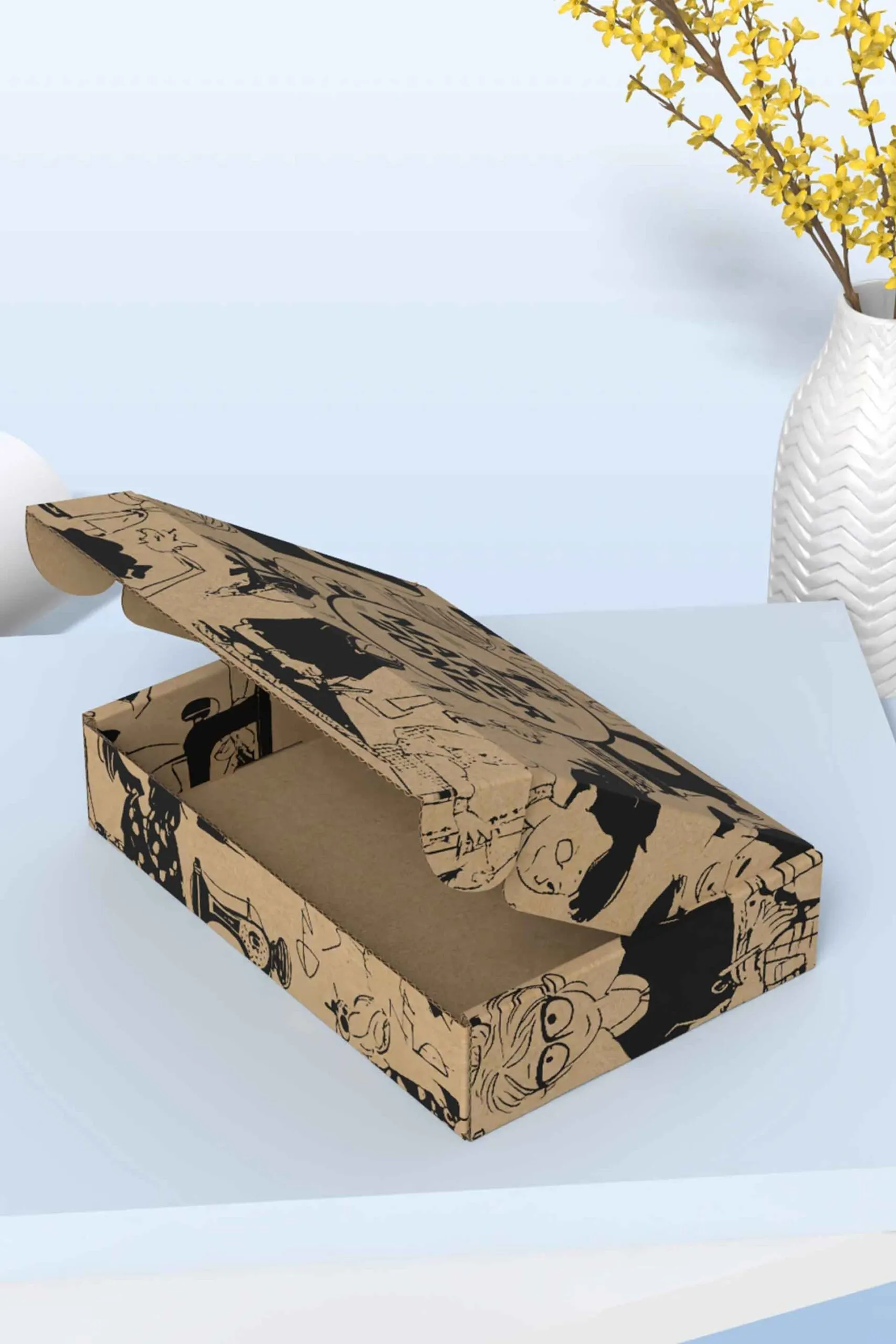 Two colours on kraft covers brand marks, a welcome message, care instructions and handling marks comfortably. Where a programme genuinely needs photographic imagery, digital, four-colour flexo and litho-lamination are available through our print partners, and our print methods guide covers which is worth it at which run length.
Opening and returning
Two small specification choices shape how the pack feels:
- A tear strip gives a clean opening in one motion, with no knife and no ragged edge. It is also the detail that makes the pack feel considered.
- A second peel and seal strip lets the subscriber reseal the same box for a return or an exchange, which matters for apparel and anything sized.
Consistency is the real requirement
A subscription programme is a repeat order with a brand attached. The box in month eleven has to match the box in month one, in board, colour and fit, because subscribers notice drift even when they could not describe it.
That means locking a specification rather than re-quoting each run: board grade, internal dimensions, crease positions, ink references, closure. We hold approved specifications for repeat supply through trade supply programmes, with call-offs scheduled against an annual volume so that the price reflects the commitment rather than each individual order.
It also means planning for the spikes. Gifting season doubles volumes for many programmes, and a one-off seasonal variant such as an advent calendar format needs tooling and board booked well before anyone is thinking about Christmas.
Sample before you launch
Design decisions on a subscription pack are hard to reverse once the first shipment goes out. We develop the structure on CAD, cut samples on the digital flatbed, and send them so you can pack a real month’s contents, close it, and put it through a courier before any tooling is ordered.
Send us the contents, the carrier and the monthly volume and we will design a format and quote the programme.