Wine shipping boxes: dividers, fitments and packs that survive the courier
How multi-bottle wine shippers are specified: divider design, base protection, board grade, the drop that actually breaks glass, and testing before you commit.
By Tradepack ·
A wine shipper has one job that the rest of packaging does not: it has to get glass through a parcel network that was built for boxes of shoes. Everything about how it is specified follows from that.
What actually breaks
It is rarely the box. Open a damaged consignment and the board is usually intact, and one or two bottles are broken at the shoulder or the neck.
That tells you where the energy went. A parcel dropped on a corner transmits the impact into the contents, and if the bottles can move, they strike each other. Glass is strong in compression and weak against a point impact from another bottle’s shoulder. A heavier outer case does not fix it. Separation does.
So the order of priority runs: separate the bottles, protect the base, then specify the board. Most failed wine packs got that order backwards.
The divider is the pack
A divider has to do three things, and partial credit does not count.
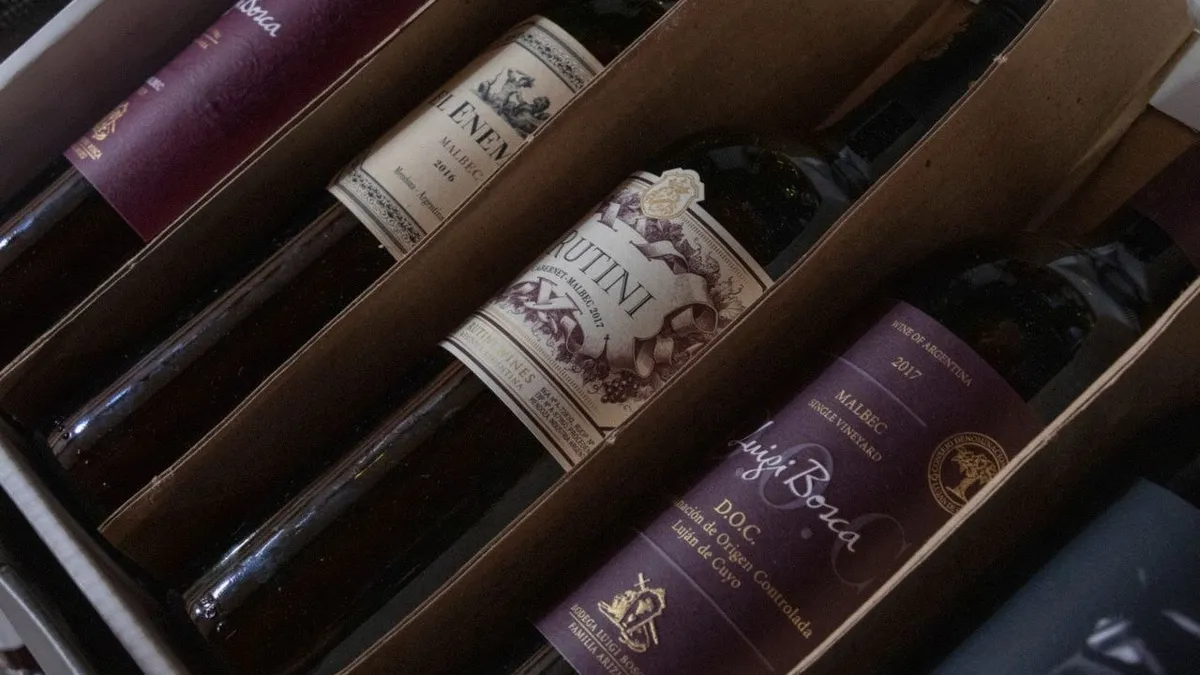
Full height. A divider that stops short of the top leaves the shoulders and necks free to meet above it, which is exactly where the breaks are. The cells run the full internal depth.
Isolation from the wall. Bottles must not touch the outer case either. An end cell that uses the case wall as one of its faces puts glass against the surface that takes the impact.
A fit to the bottle, not to the box. Burgundy, Bordeaux and sparkling bottles have different diameters and very different shoulders. A cell sized for one lets the other move. Where a case has to take mixed bottles, the cell is sized for the largest and the design has to account for the smallest rattling.
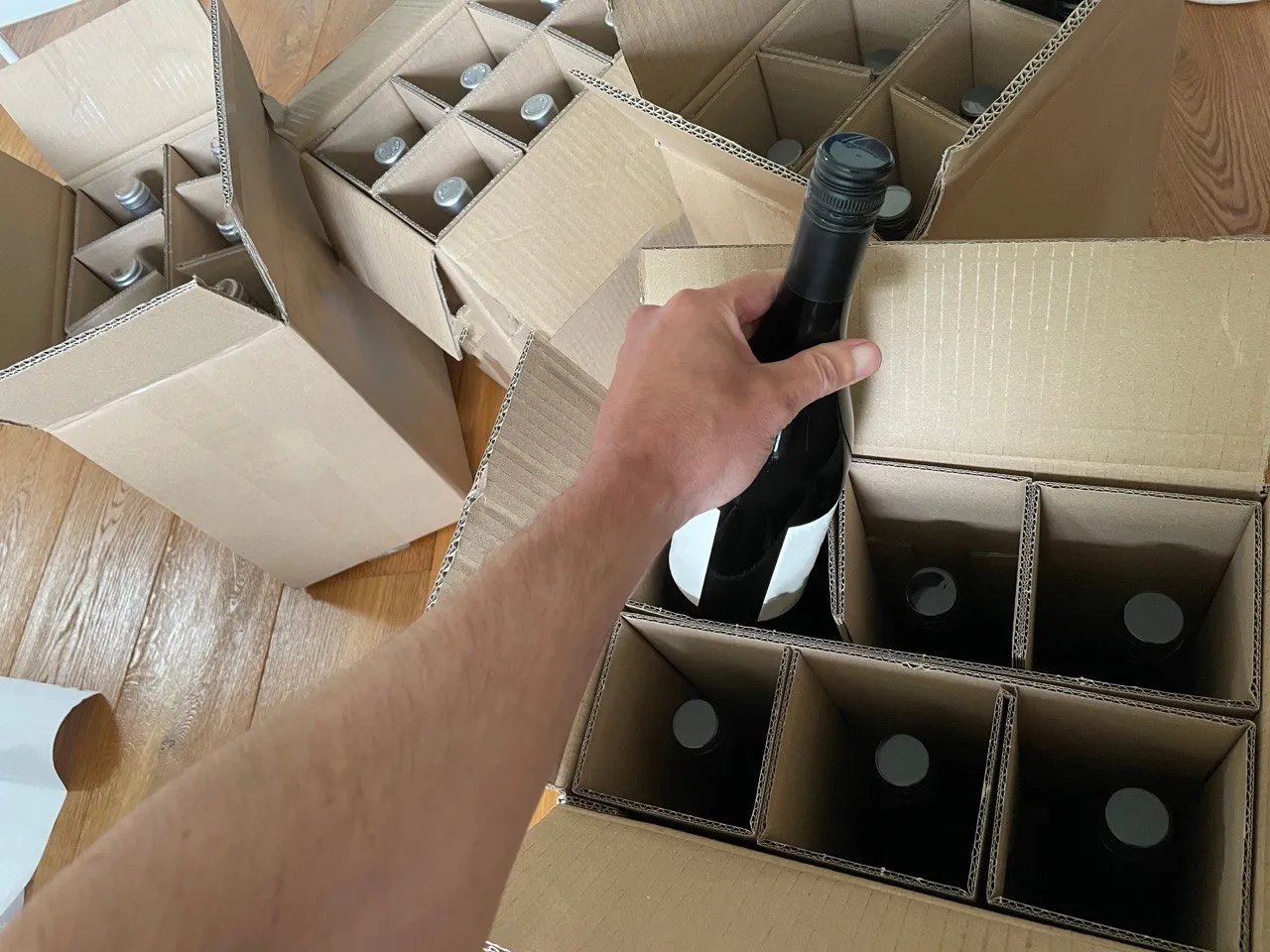
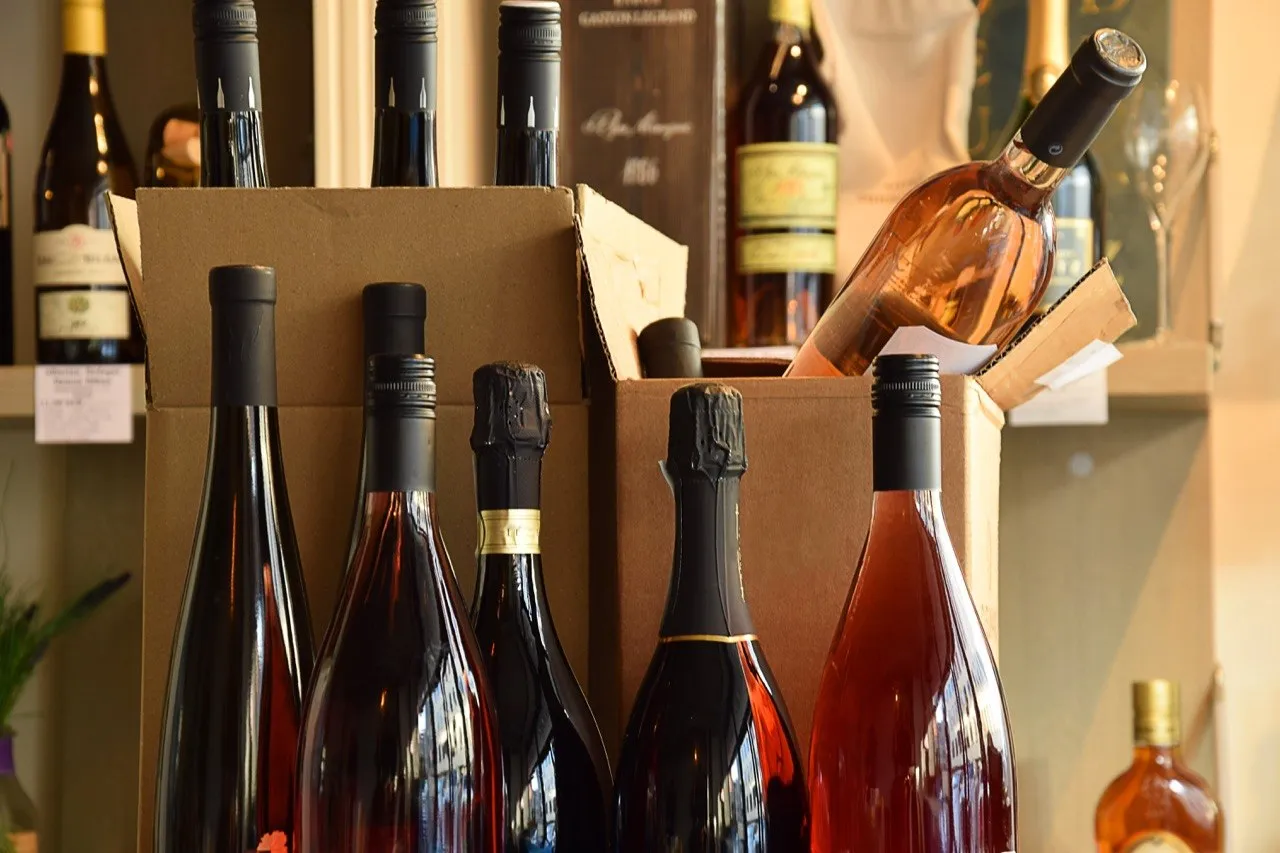
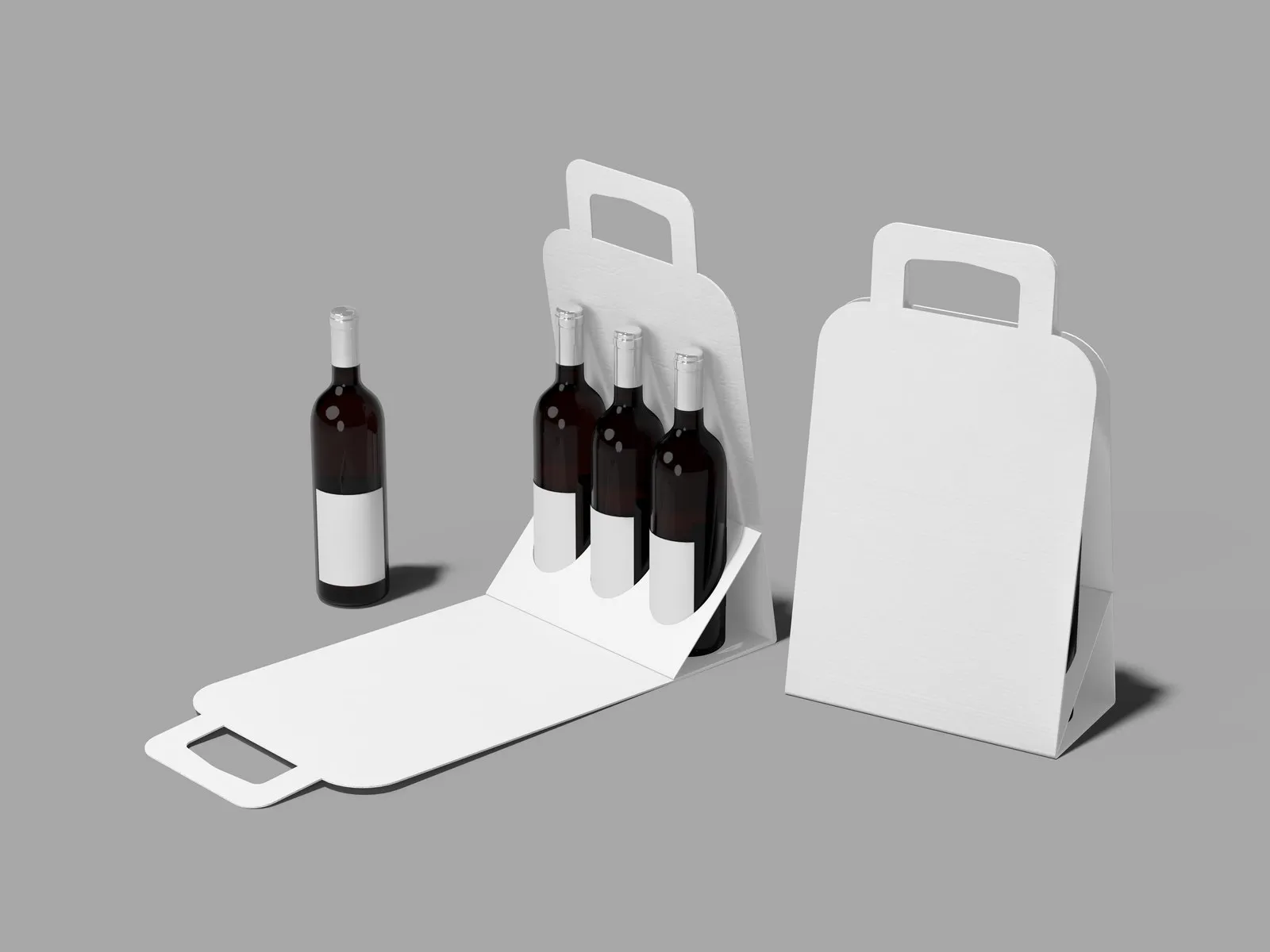
Formats in use: slotted cross-partitions assembled from pre-cut strips, one-piece die-cut fitments that fold up inside the case, and moulded pulp cradles at the base and neck. Pulp and corrugated are often combined, with pulp ends taking the vertical drop and a corrugated cell divider handling bottle-to-bottle contact. We cut the corrugated elements; pulp fitments are bought in and designed around.
Protect the base
Drop testing anything bottle-shaped shows the same thing: the base drop is the one that breaks glass, and the punt concentrates the load.
A pad under the bottles, or a fitment with a closed base, puts a layer of board between glass and floor and spreads the impact. On a case that will be hand-stacked it is worth the material. It also stops a divider pushing through the bottom flaps under load.
Board grade and the weight you are carrying
Twelve bottles is 18 to 20 kilos, and the case has to carry it through handling, stacking and a pallet.
- Double wall BC is the normal specification for twelve-bottle cases and for anything that will be stacked.
- Single wall C can carry six bottles where the handling chain is short and the pack is not stacked high.
- Edge crush is the number that predicts stacking performance, and it is where the specification should be argued, not board weight for its own sake.
- Moisture matters more than the figures suggest. Wine moves through cold stores and sits in warehouses, and corrugated loses a meaningful share of its compression strength as humidity rises. A pack specified at the edge of its capability in a dry test hall is not specified for February.
Testing before you commit
Wine is the format where a sample loaded with real product earns its cost in one afternoon.
We design the structure on CAD and cut a sample on the digital flatbed, then fill it with the actual bottles. Dropped on each corner, each edge and the base, from the height the carrier’s own handling implies. Stacked to the height the warehouse will stack it. Where a carrier requires evidence of testing, this is the point at which it gets produced, before tooling is committed rather than after a claim.
The thing being proved is not that the box survives. It is that the bottles do.
Closure and handling
Tape is normal. A peel and seal strip applied inline during manufacture closes faster at a dispatch bench and gives a tamper-evident seal without a label, which matters when the contents are alcohol.
Print earns its place here more than on most transit packs. Fragile and this-way-up marks, the bottle count, and a clear indication that the case contains glass all change how it is handled. Two colours of flexographic print covers it.
Where this sits next to the other drinks formats
A shipping case is not a gift box and not a retail unit:
- For presentation packs that also have to survive a courier, see wine and spirits gift boxes.
- For carrying bottles out of a shop or to a table, see bottle carriers.
- For cans and retail-ready trays, see cardboard trays for drinks.
- For the full range, including shippers, carriers and separators, see drinks packaging and cardboard inserts.
Send us the bottle, or its dimensions and the case count, and we will design the fitment around it, cut a sample and quote it at trade volume.